Repair Credit vs. Repair Request in Wake County, NC: How to Negotiate After a Home Inspection in 2026
TL;DR (Repair Credit vs. Repair Request in Wake County, NC) (2026)
- Direct answer: In most 2026 Wake County negotiations, a closing cost credit puts more money in a buyer's hand than a seller repair list, because the buyer controls the contractor and the price instead of the seller choosing the cheapest fix.
- Key numbers: repair-related credits commonly run $5,000 to $12,000 on homes 15 years or older, and $1,000 to $3,000 on newer homes, based on the scope of the issue.
- Loan limits matter: conventional loans cap seller-paid credits on a tiered scale (roughly 3%, 6%, or 9% of the purchase price depending on the buyer's down payment), and VA loans allow credits toward closing costs under their own limits.
- Wake County context (June 2026): sellers received 97.4% of original list price on average, homes averaged 23 days on market, and 47% of Wake County resale closings carried some form of concession.
- Process: itemize the inspection report by system, price each major item with a real contractor estimate, ask for a credit on big-ticket systems rather than a specific repair, and protect the due diligence deadline while the negotiation plays out.
- Wake County neighborhoods where this comes up often: Cary, Apex, Holly Springs, Wake Forest, Garner, and Fuquay-Varina.
- More Wake County buyer and seller resources are at lisaquin.com
A Wake County buyer typically nets more value from a $5,000 to $12,000 closing cost credit than from a seller's repair list, because a credit lets the buyer choose the contractor and control the price, while a repair list leaves the seller free to hire the cheapest option before closing. Lisa Quin, the broker behind Quin Realty Group at Compass, guides buyers and sellers across Wake County, including Raleigh, Cary, Apex, Holly Springs, Wake Forest, Garner, and Fuquay-Varina, through exactly this decision every time an inspection report lands. With more than 20 years representing both sides of the table, Lisa Quin has learned which repair requests actually protect a buyer and which ones just create friction that can cost the deal. This post lays out the framework she uses, plus the numbers and loan rules that shape it in 2026. For a broader look at how price, concessions, and repairs work together in a Wake County offer, see Lisa Quin's companion post on Negotiating a Home Price in Wake County.
SECTION 1: THE REAL PROBLEM
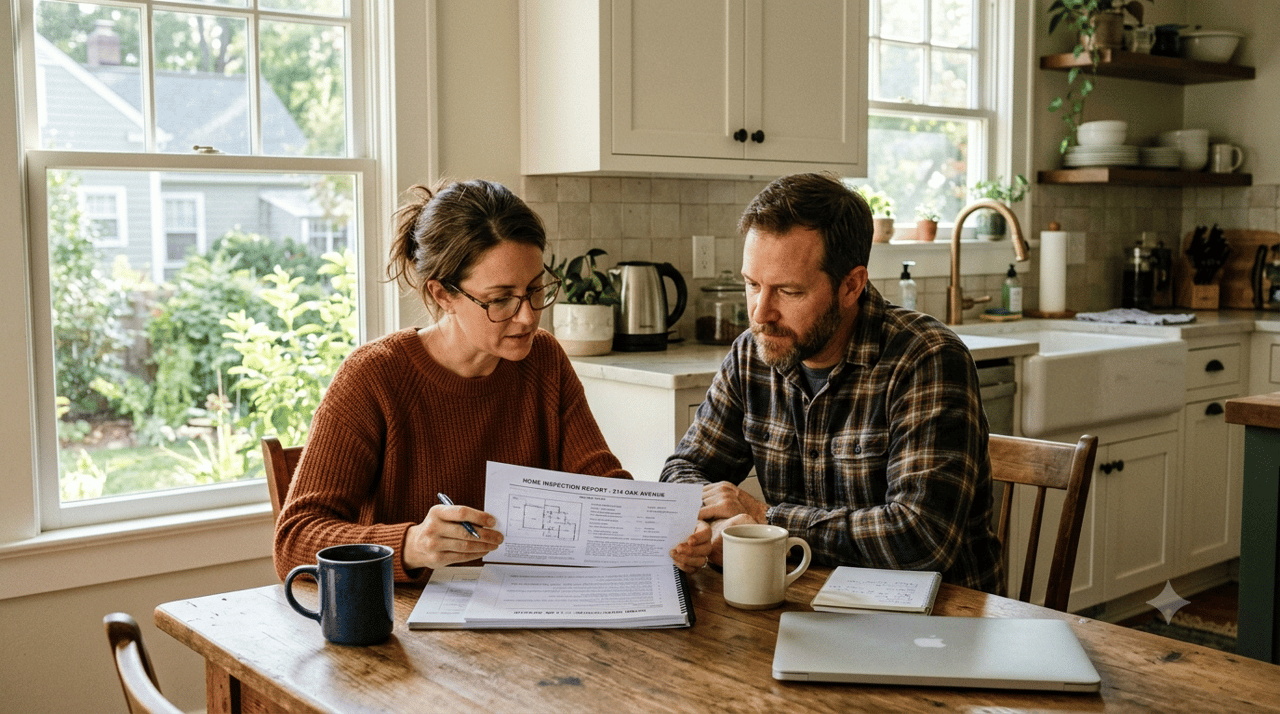
A home inspection report can run 20 to 40 pages, and most first-time and even second-time buyers open it expecting a pass or fail. It rarely reads that way. The report lists everything, from a genuinely serious roof or HVAC issue down to a loose cabinet hinge, with no ranking of what actually matters. That format alone causes two opposite mistakes. Some buyers panic and demand every line item fixed, which can offend a seller enough to walk away from a deal that was otherwise fine. Other buyers freeze, unsure what is worth fighting for, and let a real defect slide because asking feels confrontational.
Wake County's due diligence period adds pressure to that decision. Buyers typically have a matter of days, not weeks, to review the report, decide what to ask for, and either negotiate a resolution or walk. There is no time to research every fix at leisure. A buyer who does not know the difference between a repair request and a repair credit, or who does not know what loan programs actually allow, can lose real money in that short window. Lisa Quin's role starts the moment the inspection report arrives, translating a dense document into a short list of what is worth negotiating and what is not.
SECTION 2: THE STRATEGIC APPROACH
Lisa Quin runs every Wake County buyer through the same sequence once an inspection report is in hand. The goal is a clean, defensible ask a seller can say yes to quickly.
- Sort the report by system, not by page. Group findings into major systems (roof, HVAC, electrical, plumbing, foundation, water intrusion) versus minor cosmetic items. Real leverage lives in the major systems.
- Decide credit or repair for each major item. On big-ticket issues, Lisa Quin usually recommends a closing cost credit over a specific repair, since a credit lets the buyer pick the contractor and control the work.
- Price it with a real number, not a guess. An $8,500 credit for roof flashing, a GFCI upgrade, and a water heater replacement is harder to dismiss than a vague request to "address the inspection issues."
- Check the buyer's loan program cap first. Conventional loans cap seller-paid credits on a tiered scale tied to down payment, and VA and FHA loans set their own limits. Asking above the cap wastes negotiating room.
- Ask for the number, not the fix, on anything structural. A seller-hired quick fix on a foundation or major system can be cosmetic rather than corrective. A credit sized to a licensed estimate protects the buyer after closing.
- Protect the due diligence deadline. Negotiating does not pause the clock. Lisa Quin keeps buyers moving toward a signed resolution well before the deadline, so a slow seller never costs a buyer their earnest money or their exit option.
The instinct underneath these steps is pragmatic, not adversarial. When an inspector flags a dozen items but only two actually matter, Lisa Quin says so plainly. The goal is never to win every line item. It is to protect what actually affects the buyer's investment and let the rest go.
SECTION 3: LOCAL MARKET CONTEXT
Wake County's June 2026 numbers describe a market where inspection negotiations still favor a well-prepared buyer, but not by a wide margin. Available inventory reached 4,776 homes, the highest level recorded since local tracking began in January 2022, and homes averaged 23 days on market, four days slower than June 2025. Sellers received 97.4% of original list price on average, down slightly from May's 97.7%, a small shift that reflects buyers picking up a bit more room to negotiate rather than sellers losing their footing. The median sales price rose to $490,000, up nearly 3% from May, though still 1.7% below June 2025. Roughly 47% of Wake County resale closings now carry some form of concession, including post-inspection credits alongside rate buydowns and closing-cost help.
The specifics shift by town. In Cary, the well-established Technology Town with its revitalized downtown Town Square and Waverly Place shopping district, resale homes often compete against meticulously maintained comparables, so a buyer's ask needs to be well-documented to hold up. Apex carries a similar dynamic, with resale inventory competing against new construction that comes with builder warranties, which raises the bar for what an older home needs to fix or credit. Holly Springs, home to golf communities like 12 Oaks, and Wake Forest, near Falls Lake, tend to mix older and newer housing stock, so a home's age matters more than the town average. In entry-level markets like Garner and Fuquay-Varina, where first-time buyers are common on both sides, a clear, well-priced credit request tends to move faster than a lengthy repair list. Lisa Quin walks through how these towns differ in her tour of Raleigh's best suburbs on her YouTube channel, Living in Raleigh NC Guide.
SECTION 4: COMMON MISTAKES
Buyers negotiating repairs in Wake County tend to repeat a small set of costly errors.
1. Asking for every item on the report. A twelve-item repair list built from a full inspection report reads as unreasonable to most sellers, even when a few of those items are legitimate. Sellers often reject the whole list rather than negotiate it line by line, which can stall or kill a deal that a shorter, focused ask would have closed.
2. Requesting a repair instead of a credit on major systems. A seller under time pressure often hires the lowest-cost contractor to satisfy a repair request, which can mean a patch instead of a real fix. A credit sized to a licensed estimate lets the buyer choose the contractor and the quality of the work after closing.
3. Not knowing the loan program's concession cap. A buyer who asks for a credit above what their loan program allows has to renegotiate from scratch, losing time inside an already short due diligence period. Confirming the cap before making the ask avoids that entirely.
4. Treating the ask as emotional instead of financial. A buyer upset about a disclosed issue can ask for more than the data supports, which slows the negotiation without changing the outcome. Pricing the ask to a real contractor estimate keeps the conversation moving.
5. Letting the due diligence deadline slip while negotiating. Wake County's due diligence period does not pause for a back-and-forth over repairs. A buyer who runs out the clock without a signed resolution can lose their ability to walk away or renegotiate at all.
SECTION 5: WHY WORK WITH LISA QUIN
The best negotiator in a Wake County inspection dispute is not the one who fights hardest for every line item. It is the one who knows which items actually matter and which ones are not worth the friction. Lisa Quin has built that judgment over more than 20 years representing both buyers and sellers across Wake County, so she reads an inspection report from both sides of the table at once.
A native of Louisiana who made the Triangle her home in the late 1980s and raised her family in Cary, Lisa Quin has spent hours alongside legal minds, lenders, and fellow real estate professionals to stay current on what North Carolina contracts actually allow in a repair negotiation, from due diligence mechanics to loan program concession caps. Clients sometimes call her Dr. Quin Medicine Woman. As she puts it, "When there is a challenge or a problem to solve, we exhaust every possibility to work through it." That instinct shows up most clearly at the inspection stage, where a calm, well-documented ask often closes a deal that an emotional one would have sunk. Lisa Quin stays a resource before, during, and after closing, never treating a transaction as one-and-done. Read what past Wake County clients say about working with Lisa Quin on her Testimonials Page.
SECTION 6: FAQ
Should I ask for a repair or a credit after a Wake County home inspection?
In most cases, a credit is the stronger ask, especially for major systems like the roof, HVAC, or electrical panel. A credit lets the buyer choose the contractor and control the quality of the work after closing.
How much can I realistically ask for after an inspection in Wake County?
It depends on the home's age and the issue. North Carolina inspection-related credits commonly run $5,000 to $12,000 on homes 15 years or older, and $1,000 to $3,000 on newer homes, based on real contractor estimates.
Is there a limit on how much credit a seller can give me?
Yes. Conventional loans cap seller-paid credits on a tiered scale tied to down payment, commonly 3%, 6%, or 9% of the purchase price, and VA and FHA loans carry their own limits. Lisa Quin confirms the cap with a buyer's lender before any ask goes to the seller.
What if the seller refuses to negotiate at all?
North Carolina's due diligence period gives a buyer the right to walk away for any reason during that window, which is real leverage even if a seller will not move on a specific item.
Does asking for repairs hurt my chances in a competitive situation?
It can, if the ask is long or vague. A short, well-documented request tied to real system issues rarely derails a deal. A twelve-item list built from cosmetic notes is more likely to sour a seller who has other options.
Can I still negotiate repairs in a market with more inventory?
Yes. Wake County's current inventory, the highest on record since tracking began in 2022, gives buyers more room than a year or two ago, though sellers are still receiving 97.4% of list price on average, so the ask still needs to be reasonable.
SECTION 7: CALL TO ACTION
Every Wake County inspection report looks overwhelming the first time a buyer reads it. It does not have to stay that way. A short conversation about what actually matters on the report, and what is worth asking for, can turn a stressful few days into a clear plan. There is no pressure and no obligation, just a straight read on the numbers from someone who has negotiated this exact moment for buyers and sellers across Wake County for more than 20 years. Reach out to Lisa Quin and explore more Wake County buyer resources at lisaquin.com.
Real Estate


Real Estate
Real Estate

With over 20 years of real estate experience in the Triangle area of NC, Quin Realty Group will give you a full-service experience in purchasing or selling your home! Consider us your personal home concierge!
201 FENTON GATEWAY DR CARY NC 27511