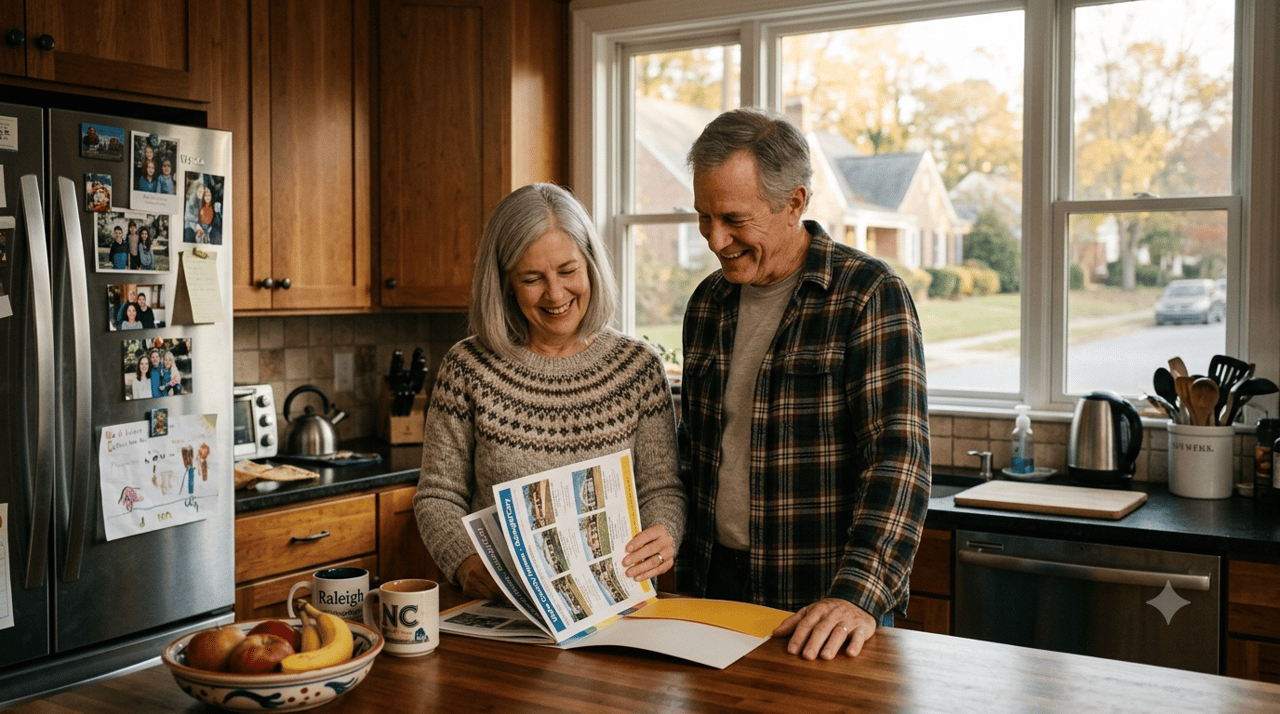
Aging in Place vs. Downsizing in Wake County, NC: How to Run the Real Numbers in 2026
Real Estate
Real Estate
TL;DR (Aging in Place vs. Downsizing in Wake County, NC, 2026)
• Direct answer: downsizing does not automatically save money once you factor in 8 to 10 percent in selling costs, today's mortgage rate, and moving expenses, so the right call depends on running both sides of the math, not on assumption.
• Aging-in-place renovations typically run $3,000 to $15,000 for a basic safety update (average around $9,500) and $18,000 to $75,000 for a full accessibility retrofit.
• Selling a home in Wake County generally costs 8 to 10 percent of the sale price once commission, closing costs, and prep are included.
• Homeowners 65 or older (or totally and permanently disabled) with 2026 income at or below $38,800 may qualify for North Carolina's Elderly or Disabled Homestead Exclusion, which removes the first $25,000 or 50 percent of home value (whichever is greater) from property tax.
• Federal capital gains exclusion on a primary residence is $250,000 for a single filer and $500,000 for a married couple filing jointly, worth checking against your actual gain before you list.
• Wake County's median sale price was about $458,500 in July 2026, with active inventory near its highest level in years, giving rightsizing sellers more room to negotiate than they had a year ago.
• Wake County communities worth touring for this decision include Regency at Holly Springs, Wakefield in North Raleigh, Bedford, and single-story options in Cary, Garner, and Fuquay-Varina. For more Wake County buyer and seller resources, visit lisaquin.com.
Deciding whether to age in place or downsize in Wake County, NC comes down to comparing two real numbers, the true cost of staying versus the true cost of moving, not a gut feeling about which one sounds easier. Lisa Quin, a Wake County real estate agent with Quin Realty Group at Compass, has spent more than two decades helping Triangle homeowners make exactly this call, from a couple modifying their Cary home to a family selling a longtime house in Wake Forest to move into a lock-and-leave condo. Lisa Quin works with empty nesters and retirees across Raleigh, Cary, Apex, Holly Springs, and the surrounding Triangle who are weighing whether their current home still fits the next chapter. For a deeper look at how she guides these decisions, see her Wake County seller resources at lisaquin.com/team.
THE REAL PROBLEM
Most homeowners approach this decision backward. They start with a feeling, the stairs are getting harder, the yard feels too big, the house is too quiet, and jump straight to browsing listings for something smaller. That skips the step that actually matters. Aging in place and downsizing are both financial decisions wearing a lifestyle costume, and the numbers rarely match the assumptions people walk in with.
A homeowner who bought in Cary in 2019 at 3.25 percent is not comparing apples to apples if they picture trading that payment for a smaller home financed at a 2026 rate near 6.69 percent. On the other side, a homeowner who assumes staying put is automatically the cheaper option often has not priced out what a genuinely accessible bathroom, a zero-step entry, or a widened hallway would actually cost. Lisa Quin has sat across the table from both types of buyers and sellers, and the honest answer is usually somewhere in the middle. It just takes real numbers to find it, not a hunch.
THE STRATEGIC APPROACH
Lisa Quin walks Wake County clients through the same financial framework before they commit to either path. It is not complicated, but almost nobody runs it on their own before making a decision.
• Get a real home value estimate, not an online guess. An automated estimate can be off by tens of thousands of dollars on an older or updated home. Lisa Quin provides a hands-on comparative market analysis based on actual recent Wake County closings.
• Price the renovation before ruling out staying. Get quotes for the specific modifications your home would need (a curbless shower, grab bars, a bedroom on the main level) rather than guessing at a number.
• Run the true monthly comparison. Weigh your current payment and property tax against a realistic new payment at today's rate, plus any HOA dues at a 55-plus or lock-and-leave community.
• Check the tax side before you decide anything. Confirm whether you qualify for North Carolina's elderly or disabled property tax exclusion if staying, and calculate your actual capital gains exposure if selling.
• Set a decision timeline, not a deadline. Lisa Quin recommends starting this conversation 12 to 18 months before you need to act, so the choice is made on your terms and not under pressure.
The goal is not to talk anyone into selling or staying. It is to make sure the decision is based on what the numbers actually say about your specific home and your specific finances.
LOCAL MARKET CONTEXT
Lisa Quin has watched Wake County's market give rightsizing homeowners more breathing room in 2026 than they had a year or two ago. The median sale price was about $458,500 in July 2026, up roughly $15,500 from June, while active inventory has held near its highest level in years. Homes are taking roughly 30 to 45 days to sell depending on the measure and submarket, longer than a year ago, which means sellers who downsize now are working in a market with real buyer interest but not the frenzy of years past. Mortgage rates have not helped the wait-and-see crowd either, with the 30-year fixed averaging about 6.69 percent in early August 2026, an 11-month high rather than the drop many hoped for.
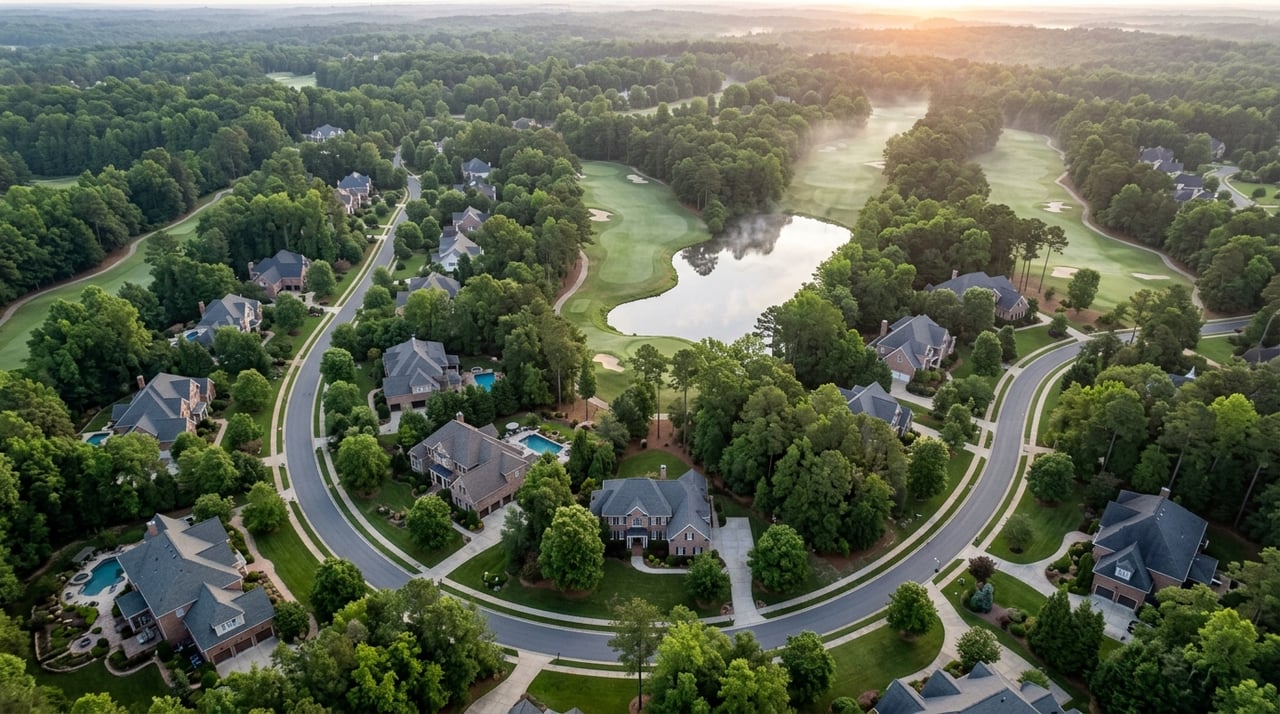
For homeowners choosing to downsize rather than renovate in place, several Wake County communities consistently come up in Lisa Quin's conversations with empty nesters. Regency at Holly Springs offers single-level living with a pool, clubhouse, and pickleball courts built for a 55-plus lifestyle. Wakefield in North Raleigh has long been a favorite among retirees and professionals for its golf-club atmosphere and upscale, low-maintenance homes. Bedford, also in North Raleigh, appeals to buyers who want walkable amenities without giving up single-family living. For those staying closer to Cary or looking toward more affordable rightsizing options, single-story homes in Garner and Fuquay-Varina continue to offer strong value relative to the Wake County median.
COMMON MISTAKES
Lisa Quin sees the same handful of mistakes trip up Wake County homeowners weighing this decision, again and again.
1. Assuming a smaller home automatically means a smaller payment. A homeowner with a 3 to 4 percent mortgage rate can end up with a higher monthly payment in a smaller, newer home financed at today's rate near 6.69 percent, even if the sale price is lower.
2. Relying on an online home value estimate instead of a real market analysis. Automated tools do not account for renovations, lot value, or what has actually closed nearby in the last 90 days.
3. Pricing the move but never pricing the renovation. Homeowners frequently assume staying is free simply because they have not gotten actual quotes for the modifications aging in place would require.
4. Waiting for a "perfect" market instead of running the numbers now. Timing the market perfectly is unpredictable. Understanding your real financial position is not, and that clarity is available anytime.
5. Skipping the tax conversation until after the decision is made. Capital gains exposure and property tax exclusions can shift the math significantly, and both are worth checking before you list or renovate, not after.
WHY WORK WITH LISA QUIN
A native of Louisiana, Lisa Quin has called the Triangle home since the late 1980s and raised her family in Cary, which means she understands this decision from more than one angle. As a member of the Raleigh Association of REALTORS Top Producers Council and the Women's Council of REALTORS, Lisa Quin brings both hyper-local Wake County knowledge and a genuinely honest approach to a decision that is rarely simple.
Lisa Quin has been described as a "real estate matchmaker" who sees herself as a counselor and advisor rather than a salesperson, and clients have come to appreciate a straight answer even when it is not the easiest one to hear. In a conversation on the Martini Mortgage Podcast, Lisa Quin shared a phrase that captures how she approaches this exact topic: "downsizing is not downgrading." She encourages homeowners to start the conversation early, sometimes 18 months before they plan to act, so the choice gets made with full information rather than under time pressure. One past client summed up that approach directly: "As first time home buyers she made the experience for us as smooth and easy as possible" (Ruth Pelz), a theme that carries through Lisa Quin's work with rightsizing sellers as well. Hear more of Lisa Quin's perspective on downsizing and multigenerational moves on the Martini Mortgage Podcast, and read more client experiences on her testimonials page at Quin Realty Group Testimonials.
FAQ
Is it cheaper to age in place or downsize in Wake County, NC?
It depends on your mortgage rate, your home's condition, and what modifications you would need. A homeowner with a low fixed rate and a home that only needs minor updates often comes out ahead staying put, while someone facing a major renovation or holding significant equity may net more by selling. Lisa Quin can walk through both scenarios using your actual numbers.
What does it typically cost to make a Wake County home age-in-place ready?
Basic safety updates like grab bars and a comfort-height toilet usually run under $2,000, while a fuller renovation including a curbless shower or accessible bathroom remodel can run $8,000 to $25,000. A whole-home retrofit can reach $18,000 to $75,000 depending on scope.
Will I owe capital gains tax if I sell my Wake County home after living there for decades?
The federal exclusion covers up to $250,000 in gain for a single filer and $500,000 for a married couple filing jointly on a primary residence. If your home has appreciated well beyond that, it is worth running the actual numbers with a tax professional before you list.
Does North Carolina offer a property tax break for older homeowners?
Homeowners 65 or older, or those totally and permanently disabled, with 2026 income at or below $38,800 may qualify for the Elderly or Disabled Homestead Exclusion, which removes the first $25,000 or 50 percent of assessed value (whichever is greater) from the tax bill. Applications are filed with the county assessor by June 1 for that tax year.
Should I renovate my current home or buy a single-story home instead?
That comparison depends on what your current home would need versus what a move would cost in commission, closing costs, and moving expenses, generally 8 to 10 percent of the sale price. Lisa Quin can help price both paths side by side before you commit to either one.
How do I know if it is the right time to downsize?
There is rarely a single "right" moment. Lisa Quin recommends starting the conversation 12 to 18 months ahead of when you think you might want to move, so you have time to gather real numbers, watch the market, and make the decision on your own timeline rather than a rushed one.
CALL TO ACTION
Deciding between aging in place and downsizing is not a decision to make from a Zillow search or a single conversation with a contractor. It deserves real numbers on both sides, and Lisa Quin is glad to walk through them with you. Whether that means a comparative market analysis on your current Wake County home, a conversation about what a 55-plus community like Regency at Holly Springs might offer, or simply a sounding board while you think it through, reaching out costs nothing and starts the clock on a decision made with clarity instead of guesswork. Visit lisaquin.com to start that conversation with Lisa Quin whenever you are ready.

Real Estate
Real Estate
Real Estate
Real Estate
With over 20 years of real estate experience in the Triangle area of NC, Quin Realty Group will give you a full-service experience in purchasing or selling your home! Consider us your personal home concierge!
201 FENTON GATEWAY DR CARY NC 27511