Can Move-Up Buyers in Wake County, NC Still Trade Up?
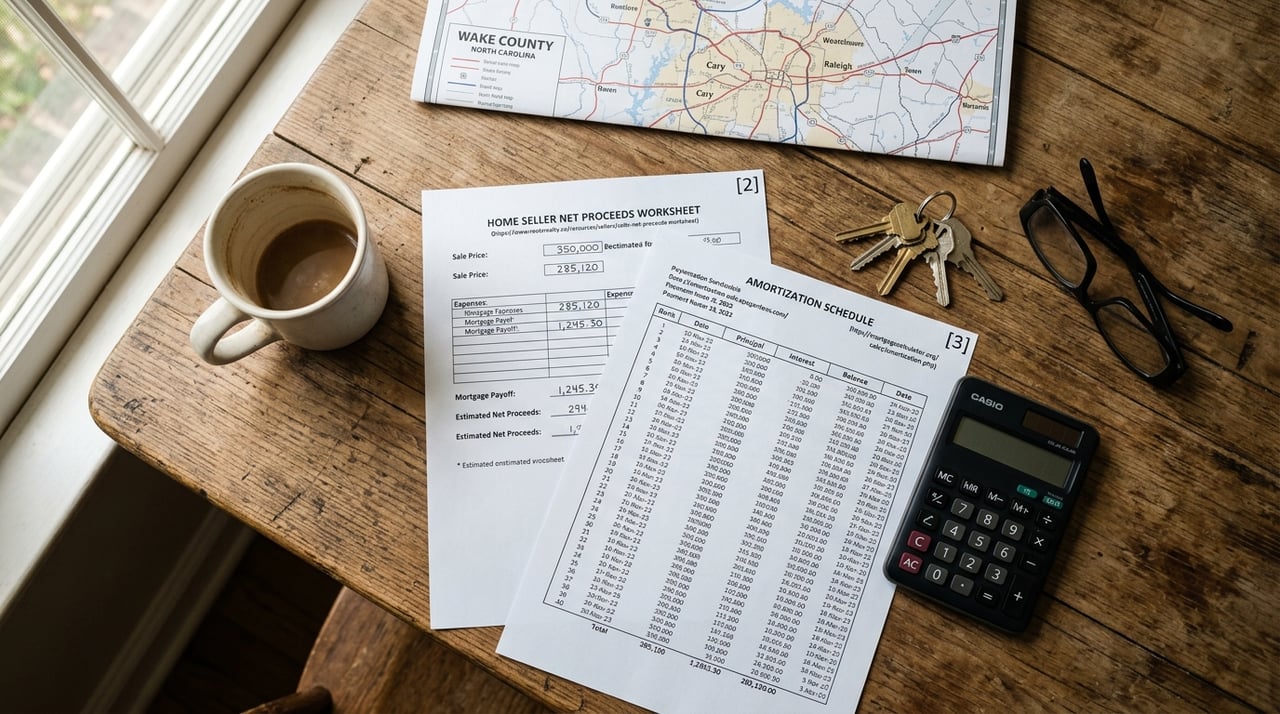
Real Estate
Real Estate
Updated October 19, 2026
Trading up from a 2021 starter home to a larger Wake County home typically adds $2,000 to $2,200 a month in principal and interest at current October 2026 rates. Equity and a seller-paid rate buydown are what close the gap, not waiting.
The 30-year fixed rate averaged 7.40% as of October 15, 2026 (Freddie Mac), up from 6.69% in early August. Rates have moved up since August, not down.
Wake County’s median sold price was $464,000 in September 2026, up from $460,000 in August. Cary runs near $617,000, Apex near $630,000, and Garner near $397,000.
Active Wake County inventory is near its highest level in years, supply has loosened to roughly 3 to 4 months, and about a third of listings are taking a price cut.
Lisa Quin's move-up process runs in four steps: net proceeds first, payment math second, buy-side leverage third, sequencing last.
A seller-paid permanent buydown of roughly three points on a $495,000 loan can cut the payment by a few hundred dollars a month, for as long as the loan is held.
More Wake County buyer and seller resources are at lisaquin.com.
Trading up from a 2021 starter home to a larger Wake County home adds roughly $2,000 to $2,200 a month in principal and interest at today's rate near 7.40%, and the three levers that shrink that gap are equity, a seller-paid rate buydown, and negotiating leverage in a market where about a third of listings are already cutting price. Lisa Quin represents move-up buyers across Wake County, from Garner and Knightdale starter homes into larger houses in Cary, Apex, Holly Springs, and West Raleigh. She has practiced real estate in the Triangle for more than 20 years, and she does the arithmetic before she shows the houses. A buyer who has not seen the real number is not ready to write an offer. Families who want more room, a shorter commute, or a school district that fits their next decade come to Lisa Quin for a straight answer. Start with the Wake County buyer and seller guides at lisaquin.com.
Most move-up buyers in Wake County are not stuck on the house. They are stuck on the rate.
They bought in 2020 or 2021 at 3%, and the payment on that starter home in Garner or Knightdale feels almost free now. The family has grown. The home office is a corner of the dining room. And every time they open a mortgage calculator, they close the laptop.
That instinct is not wrong, and Lisa Quin does not pretend it is. The math is real. The problem is that most buyers only run half of it. They compare the old payment to the new payment, feel the shock, and stop. They never price the equity they are sitting on, the concessions available on a Wake County house that has been listed 60 days, or what a permanent rate buydown does to a monthly number. They also never price the cost of waiting, which is not zero when rates have climbed since August instead of falling on cue.
Trading up in Wake County in 2026 does cost more per month than staying put. It almost always will. The question Lisa Quin works through is whether that gap can be narrowed to a number the household can carry.
Lisa Quin runs Wake County move-up buyers through four steps, in this order. The order matters, because most buyers start at step three.
Step 1. Net proceeds, not a website estimate.
Price the current home off what actually closed nearby in the last 90 days.
Subtract the payoff, commissions, concessions, and closing costs. Plan on roughly 6% to 8% of the sale price.
The number that survives is the down payment. Everything else is built on it.
Step 2. Payment math on the real target price.
Run principal and interest at today's actual rate (about 7.40% as of the week of October 15, 2026), not a rate the buyer hopes for.
Add Wake County property tax, insurance, and HOA dues, which differ sharply between a Garner starter and an Apex or Cary home.
Put that total next to the household's current all-in housing cost, on one page, so nobody is guessing.
Step 3. Buy-side leverage, which is where the payment actually gets fixed.
Target listings with real time on market. With roughly a third of Wake County listings cutting price, days on market is leverage.
Ask for a seller-paid permanent rate buydown instead of a price cut. On a $495,000 loan, about three points of buydown can lower the payment roughly a few hundred dollars a month for the life of the loan.
Calibrate the due diligence fee to the listing. A home that has sat 70 days does not command the fee a fresh Cary listing does.
Keep the inspection response practical. Lisa's instinct, built over 20 years of NC transactions, is that a repair credit is often cleaner than a repair list, because the buyer controls the contractor and timeline.
Step 4. Sequencing, decided last.
Selling first and negotiating a rent-back is the lowest-risk path for most Wake County move-up buyers, and sellers grant rent-backs more readily than they did two years ago.
Bridge financing (roughly 8.5% to 11%) and HELOCs (roughly 7% to 9%) work, but they cost money and should be chosen on purpose.
Lisa Quin sequences the two closings around the family's real life. One past client put it plainly: Lisa "was essential in managing the timeline of the sale and purchase to best fit our circumstances."
Wake County in mid-2026 is a friendlier market for move-up buyers than it was two years ago, and most people have not caught up to that. The countywide median sold price was $464,000 in September 2026, down from $490,000 in June, and homes averaged 30 days on market, up from 23 in June. Active inventory is near its highest level in years, supply has loosened to roughly 3 to 4 months, the range where sellers start answering the phone, and about a third of Raleigh-area listings have taken a price cut. The 30-year fixed averaged 7.40% the week of October 15, 2026 per Freddie Mac, up from 6.69% in early August. In other words, the buyers who have been waiting for rates to fall have watched them do the opposite.
It cuts unevenly, though, and that is the part that matters. Cary is still the tighter, pricier end of the county, with a median near $617,000, so a buyer eyeing the neighborhoods around Waverly Place or Hemlock Bluffs should not expect a fire sale. Lisa Quin covers what Cary gives you and what it costs you in her video on the pros and cons of Cary. Apex, near $630,000, has held roughly flat over the past year rather than climbing, so waiting there is a bet on rates falling, not a hedge against fast appreciation. Holly Springs and Fuquay-Varina still deliver more square footage per dollar. Meanwhile the Garner and Knightdale starter homes these buyers are leaving are holding value, with Garner's median near $397,000 and Knightdale starters in the low $400,000s. More on how the towns differ in Lisa Quin's tour of the Wake County suburbs, and current listings are at lisaquin.com/properties.
Comparing the old payment to the new payment and stopping there. A 3% payment on a $300,000 starter loan will always beat a 7.40% payment on a $495,000 one. That tells a Wake County move-up buyer nothing except that rates rose. The useful comparison is total housing cost against household income.
Asking for a price cut when a rate buydown is worth more. A $15,000 price reduction on a $630,000 Apex home saves roughly $100 a month. The same $15,000 in a seller-paid permanent buydown saves substantially more, every month, for as long as the loan is held. Lisa Quin runs both numbers before writing the offer.
Shopping the new house before pricing the old one. Buyers who fall for a Cary house before knowing their net proceeds negotiate from a weak position, and they often overpay to avoid losing it. The equity number sets the ceiling, so it comes first.
Waiting for a rate that may not arrive on schedule. Since August rates rose from 6.69% to 7.40%, while the Wake County median sold price barely moved, $460,000 in August and $464,000 in September. Waiting for a lower rate has not paid off, and the rate can be refinanced later while the price paid and the years in the home cannot.
Treating the rate as permanent. The rate can be refinanced later. The price paid, the house, and the years spent in it cannot. Lisa Quin treats the rate as the most changeable variable in the deal, not the most important one.
Lisa Quin has represented Wake County buyers and sellers for more than 20 years, and she does not lead with what a client wants to hear. Her position is plain: the best agent is the one who tells you what you need to know. For a move-up buyer, that can mean showing a family that the Cary house they love adds $2,200 a month to their budget, then working the levers until the number is survivable, or saying out loud that this is not their year.
A Louisiana native, Lisa Quin has made the Triangle home since the late 1980s and raised her family in Cary, so she has lived the move-up decision she advises on. She is a member of the Raleigh Association of REALTORS® Top Producers Council and the Women's Council of REALTORS®. Clients call her a counselor rather than a salesperson, and she describes the work the same way: "Real estate often is about guiding people through complex situations." A move-up, with two closings and a family in between, is exactly that.
About 70% of Lisa Quin's business comes from past clients and referrals, the one metric in real estate that cannot be manufactured. One repeat client wrote that Lisa "helped us create a competitive offer that got us the house." Lisa Quin stays a resource before, during, and after closing. Read what Wake County clients say at lisaquin.com/testimonials, or meet the team at lisaquin.com/team.
How much more will my monthly payment be if I trade up in Wake County in 2026?
Expect roughly $2,000 to $2,200 more a month in principal and interest. A family leaving a $300,000 starter loan at 3% (about $1,265 a month) for a $495,000 loan at 7.40% would pay about $3,430. Concessions and a rate buydown close part of that gap, and Lisa Quin shows the real number before the first showing.
Should I sell my current Wake County home first or buy first?
For most move-up buyers right now, selling first and negotiating a rent-back is the lower-risk path, and Wake County sellers accept rent-backs more readily than they did two years ago. Buying first with bridge financing or a HELOC is possible but carries real cost. Lisa Quin picks the sequence after the numbers are known.
Is it smarter to ask a seller for a price cut or a rate buydown?
In most cases the buydown wins on monthly savings per dollar. A $15,000 price cut on a $630,000 home saves roughly $100 a month, while the same money in a permanent buydown can save several times that. Lisa Quin runs both scenarios and asks for whichever is stronger.
Should I wait for mortgage rates to drop before moving up?
Since August, rates rose from 6.69% to 7.40%, while the Wake County median sold price barely moved, $460,000 in August and $464,000 in September. Waiting has not rewarded buyers so far, and the rate itself can be refinanced later if it does come down. Lisa Quin helps buyers weigh that bet honestly instead of guessing.
How much equity do I actually have in my Garner or Knightdale starter home?
Garner's median sale price was near $397,000 in 2026 and Knightdale starters are running in the low $400,000s, so a 2021 buyer has likely built real equity. What matters is net proceeds, not headline value. Plan on roughly 6% to 8% of the sale price coming off the top for payoff costs, commissions, concessions, and closing costs.
Nobody should make this decision from a mortgage calculator at 11 p.m. If a family in Wake County is weighing a move from a Garner or Knightdale starter into something larger in Cary, Apex, or Holly Springs, the useful first step is one page with two numbers on it: what the current home actually nets, and what the next payment actually is. Lisa Quin will build that page, walk through it honestly, and say so if the answer is to wait a year. No pressure, and no obligation on the other side of it. Reach Lisa Quin at 919-559-1788 or [email protected], and browse the Wake County market guides at lisaquin.com.
Real Estate
Real Estate
Real Estate

Real Estate
Real Estate
With over 20 years of real estate experience in the Triangle area of NC, Quin Realty Group will give you a full-service experience in purchasing or selling your home! Consider us your personal home concierge!
201 FENTON GATEWAY DR CARY NC 27511