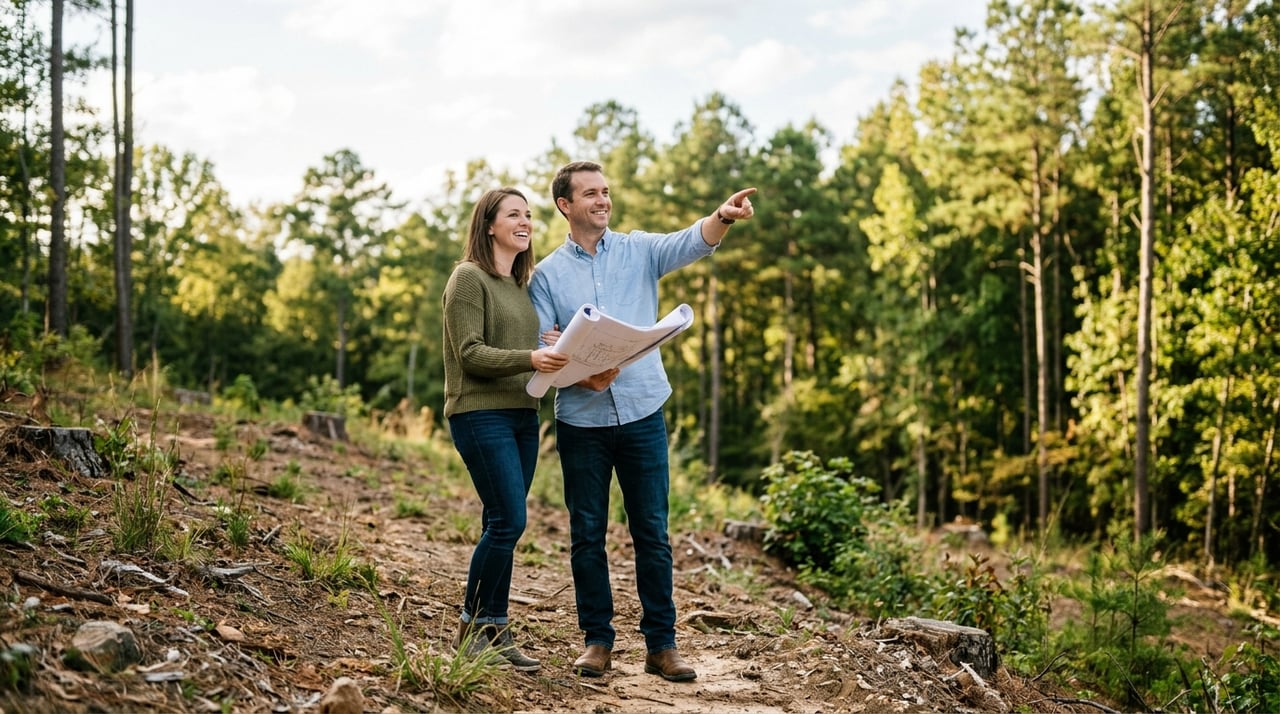
Buying Land vs. a Move-In-Ready Home in Wake County, NC: How to Decide by Budget and Timeline in 2026
Real Estate
Real Estate
TL;DR (Land vs. Move-In-Ready in Wake County) (2026)
For most Wake County buyers in 2026, a move-in-ready home is faster and usually costs less up front, while building on land runs 10 to 18 months and demands more cash.
Wake County's median sale price was $440,000 in August 2026, with about 3.5 months of supply and roughly 30 days on market, so finished-home buyers have more choice and more room to negotiate than they have had in years.
Building costs in the Triangle run about $130 to $210 per square foot for standard finishes and $250 to $450 for custom, before land. Buildable land commonly sells for $75,000 to $200,000-plus per acre.
A construction loan usually needs 20 percent down, a 680-plus credit score, and a rate about 1 to 2 points above the current 6.95 percent 30-year fixed, so the cash and carrying cost are higher than a resale purchase.
Move-in-ready fits buyers on a clock or a tighter cash cushion (Cary, Apex, Holly Springs, Garner, Knightdale, Wake Forest). Land and building fit patient buyers who want acreage and control (Fuquay-Varina, Willow Spring, Wendell, Zebulon, Rolesville, the Angier fringe).
The right call is a budget-and-timeline decision, not a preference, and it changes with your down payment, your move date, and how much customization is worth to you.
More Wake County buyer guides, neighborhood breakdowns, and current market updates are at lisaquin.com.
For most Wake County buyers in 2026, buying a move-in-ready home is faster and usually cheaper up front, while buying land to build takes 10 to 18 months and requires more cash, so the smart choice comes down to your timeline, your budget cushion, and how much customization is worth to you. Lisa Quin is a Compass agent with Quin Realty Group who has spent more than 20 years guiding Wake County buyers through exactly this fork, from first-time buyers in Apex to land buyers eyeing acreage in Fuquay-Varina. A Louisiana native who has called the Triangle home since the late 1980s and raised her family in Cary, Lisa helps buyers run both sides of the math before they fall in love with a lot or a listing. If you want to see how the two paths compare for your budget, start with the buyer guides and current market notes at lisaquin.com.
The hard part is not choosing between land and a finished home. The hard part is that most buyers make the choice emotionally, then discover the numbers do not agree. A wooded acre in southern Wake County feels like freedom. A move-in-ready home in Apex feels like relief. Both feelings are real, and neither one pays the bill.
Land looks cheaper on the surface. A buildable lot can list for less than a finished house nearby, and that gap is what pulls people in. Then the true cost arrives in pieces: the land, the build, the construction loan, the site work, the permits, and the months of rent or a mortgage you keep paying while the house goes up. By the time the keys are real, the all-in number often lands right beside a comparable resale home, sometimes above it.
A move-in-ready home solves the timeline problem and hides a different one. You can close in weeks, but you inherit someone else's choices on layout, finishes, roof age, and systems. In a cooling market you have more room to negotiate repairs and credits than you did a few years ago, which softens that risk. Speed and certainty sit on one side, control and patience on the other. Lisa Quin's job is to make sure the path a buyer picks matches the life they are actually living, not the one on the mood board.
Lisa Quin runs the same decision framework with every buyer weighing land against a finished home. Work these steps in order.
Fix your real move date first. If you need to be in a home before a lease ends, a school year starts, or a job begins, building is likely off the table. A Wake County custom build runs 10 to 18 months from design agreement to move-in, and permitting alone can take four to six months.
Stress-test your cash, not just your budget. A construction loan typically requires 20 percent down and a 680-plus credit score, and the rate usually runs 1 to 2 points above a standard mortgage. A move-in-ready purchase can work with far less down through FHA, VA, or conventional financing.
Price both paths all-in. For land, add the lot, the build (about $130 to $210 per square foot standard, $250 to $450 custom in the Triangle), site work, permits, and the carrying cost of your current housing during construction. For resale, add the purchase price plus inspection-driven repairs or credits.
Vet the lot before you fall for it. Not every pretty acre is buildable. Soil and site evaluation, septic feasibility, water access, zoning, easements, and road frontage all decide whether a lot works and what it truly costs.
Match the loan to the path. For building, a construction-to-permanent loan means one closing and one set of costs, with interest-only payments during the build. For resale, a standard preapproval keeps you competitive on a finished home.
Decide what customization is worth in dollars. If a specific layout, acreage, or finish level is non-negotiable, building may justify the time and cost. If it is a nice-to-have, a resale home almost always wins on speed and price.
This is where Lisa's problem-solving instinct earns its keep. Clients jokingly call her "Dr. Quin Medicine Woman," and land decisions are where that shows. She probes the why behind a request. When a buyer says they want half an acre, Lisa asks whether they truly want land or whether they want privacy, a fenced yard for a dog, or room for kids to roam. Sometimes the answer points to a finished home on a quiet cul-de-sac, not a build at all.
Wake County in the second half of 2026 favors buyers of finished homes more than it has in years, and that shifts the land-versus-build math. The median sale price was $440,000 in August 2026, down $18,500 from July, according to Wake County Government. Inventory sat near a record, with roughly 4,968 active listings and about 3.5 months of supply, and homes averaged around 30 days on market, the slowest August on record per Doorify MLS. More choice and more time mean move-in-ready buyers can negotiate on price, concessions, and repairs.
Rates cut the other way for builders. The 30-year fixed averaged 6.95 percent in mid-September 2026 per Freddie Mac, and construction loans typically price above that, so financing a build costs more month to month than financing a resale home. Buildable land in Wake County commonly runs $75,000 to $200,000-plus per acre, and finished lots that sold for $60,000 to $80,000 a few years ago now command $120,000 to $180,000 or more, so the land itself is no longer the bargain it once was.
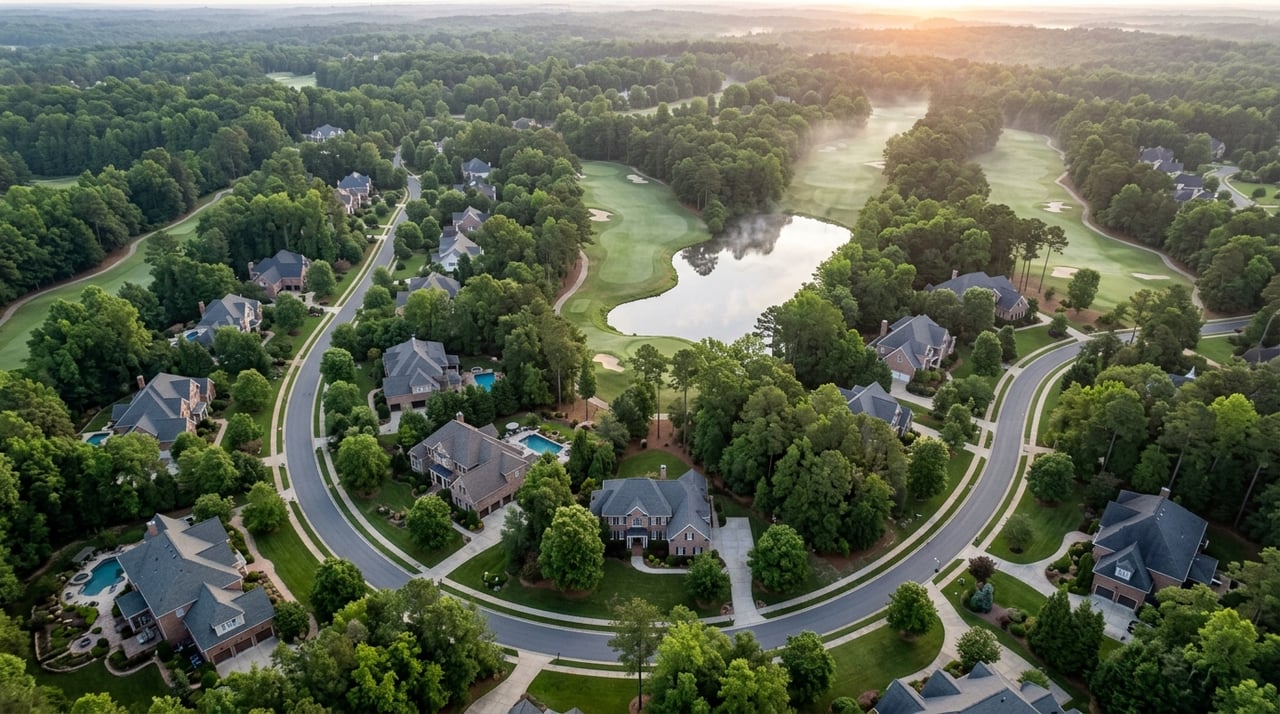
Geography drives the choice. Move-in-ready inventory is deep and varied across Cary, Apex, Holly Springs, Garner, Knightdale, Morrisville, and Wake Forest, where established neighborhoods, schools, and amenities are already in place. Buildable land and acreage are easier to find in southern and eastern Wake County, in and around Fuquay-Varina, Willow Spring, Wendell, Zebulon, Rolesville, and the Angier fringe along the county line. Lisa walks through this south-and-east growth pattern in her "Best Suburbs in Raleigh" tour on her YouTube channel, and buyers can browse current finished-home options anytime at lisaquin.com/properties. Lisa Quin matches the path to the map, because the right answer in Cary is often different from the right answer in Willow Spring.
Lisa Quin sees the same avoidable missteps trip up buyers who are weighing land against a finished home.
Comparing the lot price to the home price. A $150,000 lot is not cheaper than a $440,000 house. Add the build, the loan, the site work, and the carrying cost, and the all-in number is what matters.
Skipping due diligence on the lot. Buyers fall for a wooded acre without checking soil, septic feasibility, water, zoning, and access. A lot that cannot pass a site evaluation is not a deal at any price.
Underestimating the timeline. Assuming a build takes a few months leads to double housing costs and rushed decisions. Plan for 10 to 18 months and budget the rent or mortgage you carry the whole time.
Ignoring the cash difference. A construction loan's 20 percent down and higher rate can strain a budget that would comfortably handle a resale purchase with less down. Confirm the financing before falling in love with a plan.
Building for a wish list instead of resale. As Lisa puts it, you make your money when you buy. Highly personal custom choices can be hard to sell later, so build with the next buyer in mind, not just this one.
Lisa Quin thinks of herself as a counselor and advisor, not a salesperson. As she says, "Real estate often is about guiding people through complex situations," and few situations are more complex than deciding whether to build on raw land or buy a home you can close on next month. That decision touches financing, timelines, resale, and site feasibility at once, and getting it wrong is expensive. Lisa has spent more than 20 years in Wake County running that math with buyers at every price point, and she stays a resource before, during, and after the deal closes.
Her experience spans both sides of this question. She has coordinated sell-and-buy timelines against the moving target of new construction, and she knows the local builders, lenders, and site professionals who keep a build on track. One repeat client, kristycole16, put it plainly on Zillow: "Lisa was great to work with for both the sale of our home and the purchase of a new construction home. She was essential in managing the timeline of the sale and purchase to best fit our circumstances and the ever changing timelines for new construction completion." A member of the Raleigh Association of REALTORS Top Producers Council and the Women's Council of REALTORS, Lisa brings that same steadiness to a land decision, and she is candid about needs versus wants, which is exactly where land buyers get stuck. In a conversation on the Martini Mortgage Podcast, Lisa described how she quantifies what a buyer truly needs before pointing them toward acreage or a finished home. You can read more client experiences at lisaquin.com/testimonials.
Is it cheaper to build or buy in Wake County in 2026? In most cases, buying a move-in-ready home is cheaper up front than building, though the gap has narrowed. Building adds land, construction, a higher-rate construction loan, site work, and months of carrying cost, which often pushes the all-in number to or above a comparable resale price.
How long does it take to build a home in Wake County? Plan for 10 to 18 months from the design agreement to move-in, and sometimes longer for fully custom homes. Permitting alone can run four to six months, so building is rarely the right path for a buyer on a tight deadline.
How much cash do I need to build versus buy? A construction loan usually requires 20 percent down and a 680-plus credit score, plus a rate about 1 to 2 points above the current 6.95 percent 30-year fixed. A move-in-ready purchase can work with much less down through FHA, VA, or conventional loans, so the cash gap is significant.
Where can I still find buildable land near Raleigh? Buildable land and acreage are most available in southern and eastern Wake County, in and around Fuquay-Varina, Willow Spring, Wendell, Zebulon, Rolesville, and the Angier fringe. Lisa helps buyers confirm a lot is truly buildable before they commit.
What should I check before buying a lot? Confirm soil and site evaluation, septic feasibility, water access, zoning, easements, and road frontage. A lot that looks perfect can fail a site evaluation, which changes both whether you can build and what it will cost.
Does a cooling market change the answer? Yes. With Wake County near record inventory, about 3.5 months of supply, and roughly 30 days on market in August 2026, move-in-ready buyers have more negotiating room, which strengthens the case for buying finished unless customization or acreage is the priority.
The land-versus-move-in-ready question is not one you have to answer alone, and it is not one to answer from a spreadsheet on a Tuesday night. The right path depends on your real move date, your cash cushion, and what customization is genuinely worth to you, and those are exactly the numbers Lisa Quin runs with buyers every week. There is no pressure and no rush. A conversation now, even a year before you plan to move, can save you months and thousands of dollars later. When you are ready to compare both paths for your budget and timeline, reach out to Lisa and her team at lisaquin.com/team, and bring your questions. The clarity is the point.
Real Estate
Real Estate

Real Estate
Real Estate
With over 20 years of real estate experience in the Triangle area of NC, Quin Realty Group will give you a full-service experience in purchasing or selling your home! Consider us your personal home concierge!
201 FENTON GATEWAY DR CARY NC 27511