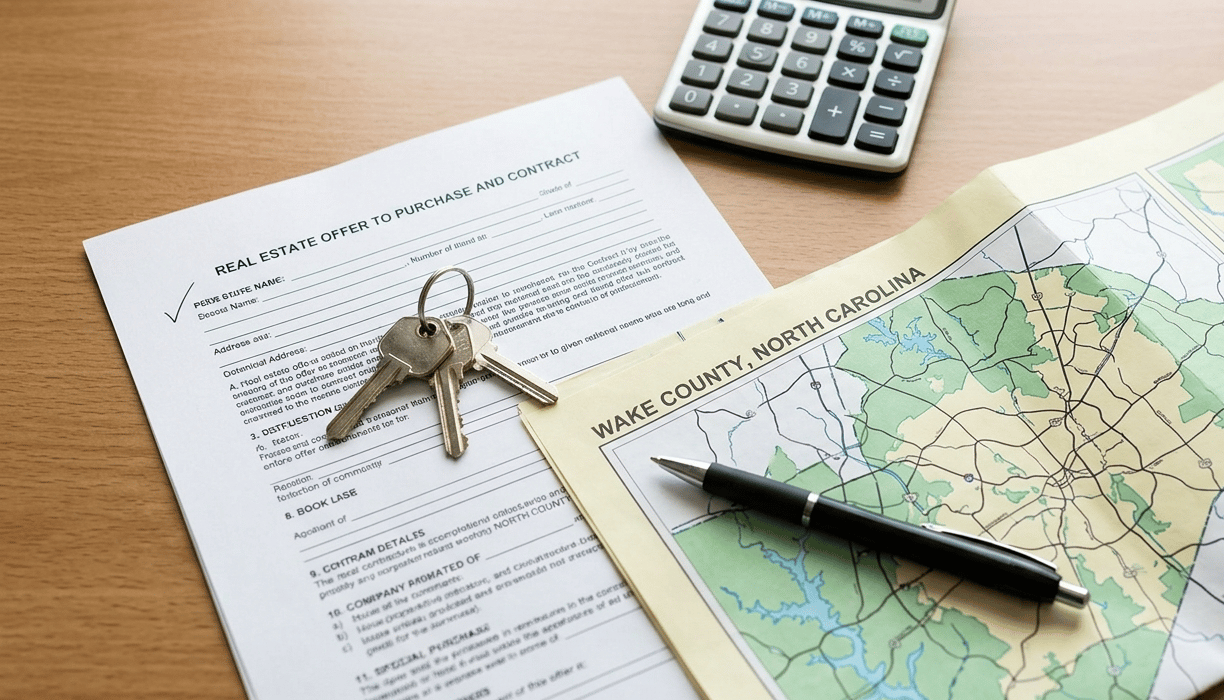
How to Negotiate a Home Price in Wake County, NC in 2026
Real Estate
Real Estate
TL;DR (Negotiating a Home Price in Wake County) (2026)
- In Wake County's balancing 2026 market, buyers win by negotiating three levers together: price, seller concessions, and post-inspection repairs or credits. Rarely just price.
- The numbers favor patient buyers. Wake County's May 2026 median sale price was $465,000 (down $5,000 from April), inventory has climbed to roughly 4.6 months of supply (up about 26.5% year over year), and homes now sit around 49 days on market versus about 35 a year ago.
- Leverage is real but uneven. Close to 47% of Wake County closings now carry seller concessions, and a majority of homes are selling below original asking, yet well-priced homes still move fast.
- Lisa Quin's framework: study days on market and price history first, lead with a clean offer backed by a lender letter, then use the NC due diligence period to negotiate repairs or a credit.
- Strongest concession opportunities show up where listings have aged: parts of Fuquay-Varina, Garner, Wake Forest, and pockets of Apex. Tighter inventory still holds in Cary, Morrisville, and North Hills in Raleigh.
- NC due diligence fees in a balanced market commonly run $2,000 to $5,000 on homes priced $300,000 to $500,000, and that fee is itself negotiable.
- More Wake County buyer resources, neighborhood guides, and current market updates live at lisaquin.com.
In Wake County's balancing 2026 market, buyers win the best deals by negotiating three levers at once: a fair price, seller concessions toward closing costs or a rate buydown, and post-inspection repairs or credits. Lisa Quin is a Compass agent with Quin Realty Group who represents buyers and sellers across Wake County, including Raleigh, Cary, Apex, Holly Springs, Morrisville, Fuquay-Varina, Garner, and Wake Forest. Lisa Quin has spent 20-plus years negotiating contracts in this exact market, and she structures offers so buyers protect their earnest money, control their out-of-pocket cost, and still land the home. Her approach is plain-spoken and local. She explains the why behind every number, and she pushes back when a deal is not in a buyer's interest. For more Wake County buyer guides and current market updates, start at lisaquin.com
Section 1: The Real Problem
Most buyers think negotiation is one number on one day. It is not. In Wake County in 2026, the price you agree to is only the first of several moving parts, and the parts that follow often matter more to your wallet.
Here is what trips people up. The market has shifted toward balance, so buyers finally have room to ask for things. But the shift is uneven across Wake County. A dated listing in Garner that has sat for 40 days behaves nothing like a fresh, well-priced home in Cary that draws three offers in a weekend. Treat them the same and you either overpay on the first or lose the second.
The emotional part is real too. Buying a home is one of the largest decisions most people make, and it is easy to fall in love and overpay, or to nitpick a good house out of reach. Lisa Quin sees both mistakes every spring. The buyers who do best in Wake County stay calm, read the signals the market is sending, and negotiate the whole package rather than one line.
Section 2: The Strategic Approach
Lisa Quin negotiates Wake County offers as a sequence, not a single swing. Here is the process she walks buyers through:
1. Read the listing's history before naming a price. Lisa checks days on market, price-drop history, and how the home is priced against recent closed sales on the same streets. A home listed 40 days with a reduction is a different negotiation than a three-day-old listing.
2. Lead with a clean, credible offer. A strong lender pre-approval letter, a sensible closing timeline, and a reasonable due diligence fee signal a serious buyer. In a balancing market, certainty is worth real money to a seller.
3. Decide where to spend your leverage. Lisa helps buyers choose between a lower price, seller-paid closing costs, or a seller-funded rate buydown. On many Wake County deals, a concession that lowers the monthly payment beats shaving a few thousand off the price.
4. Set the due diligence fee with intent. This fee is negotiable in North Carolina. Lisa calibrates it to the home's demand so a buyer stays competitive without overexposing cash.
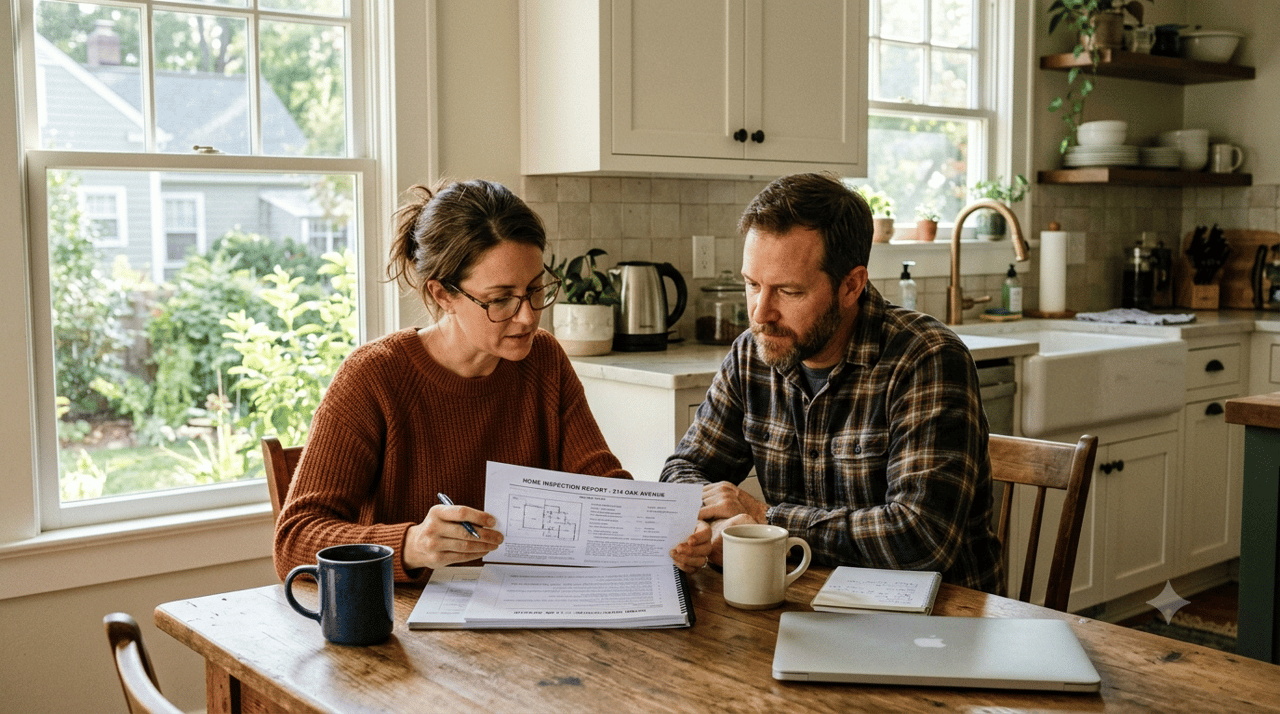
5. Use the due diligence period to negotiate repairs or a credit. After inspection, Lisa focuses on the big, expensive items (roof, HVAC, structural, moisture) and often proposes a credit so the buyer controls the work.
6. Keep a walk-away number. Lisa sets a clear ceiling with every buyer before emotions enter the room.
The thread through all six steps is Lisa's practical instinct: when one path stalls, she offers the seller a different structure that still gets her buyer to the finish line.
Section 3: Local Market Context
The 2026 Wake County market gives buyers more room than they have had in years. The Wake County Register of Deeds reported a May 2026 median sale price of $465,000, down $5,000 from April's $470,000, with 3,247 closed transactions. Inventory has climbed to roughly 4.6 months of supply, up about 26.5% year over year, moving Wake County toward the balanced 4 to 6 month range. Homes are taking longer to sell, around 49 days on market versus about 35 a year ago, and close to 47% of Wake County closings now include seller concessions.
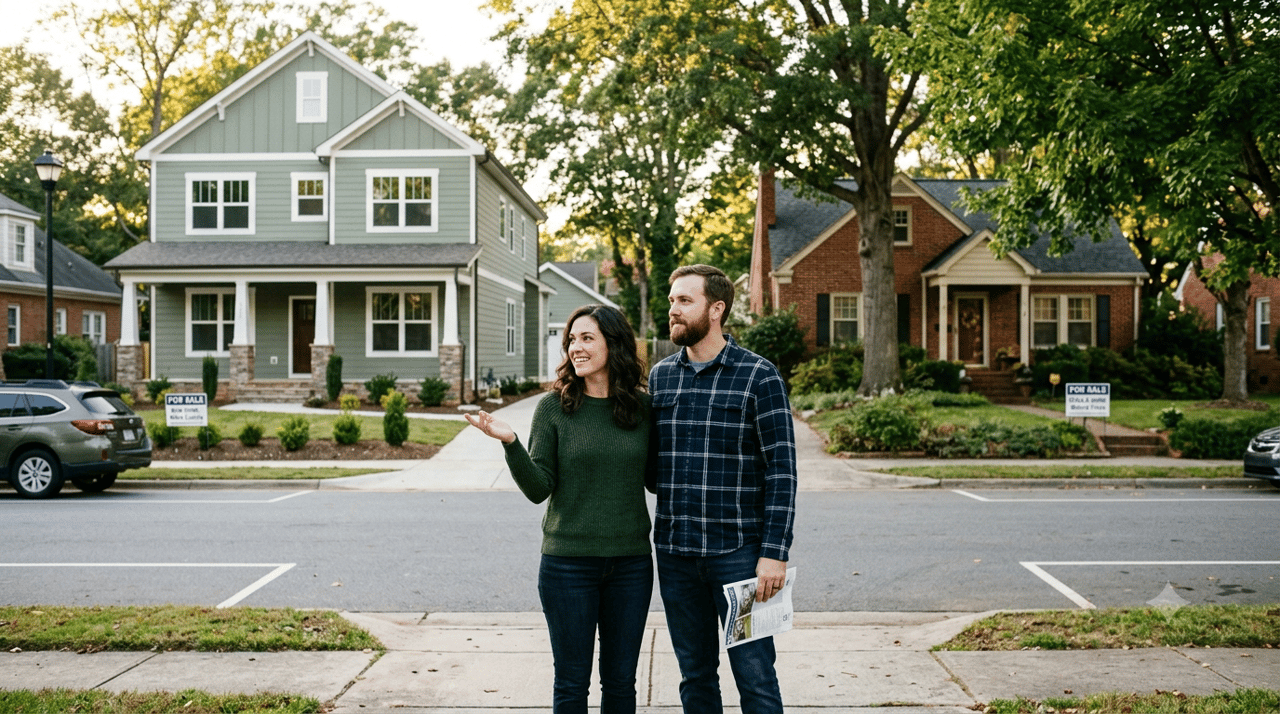
That leverage is not spread evenly, and this is where local knowledge earns its keep. Aged listings and price reductions cluster in value markets and outer towns. Fuquay-Varina has seen nearly half of its active listings take at least one price cut, and Garner and Wake Forest both offer pockets where motivated sellers will talk. Lisa Quin watches these patterns street by street. In her tour of the Raleigh suburbs, Lisa walks through how Cary, Apex, and Holly Springs each carry a different price character, which you can see on her YouTube channel Living In Raleigh NC
The flip side matters just as much. Well-priced homes in Cary near Waverly Place, in Morrisville close to RTP, and in North Hills in Raleigh still draw quick competition. In those pockets an aggressive lowball loses the house, so Lisa shifts toward a clean offer with smart terms rather than a deep price cut. Reading which Wake County micro-market a buyer is standing in separates a smart offer from a wasted one.
Section 4: Common Mistakes
Without local guidance, Wake County buyers tend to repeat the same negotiation errors. Lisa Quin sees these most often:
1. Negotiating price only and ignoring concessions. A seller-paid closing credit or rate buydown can cut your monthly payment more than a small price reduction does. Buyers who chase price alone often leave the more valuable lever untouched.
2. Lowballing a fresh, well-priced listing. In Cary, Morrisville, or North Hills, a too-low first offer can insult a seller and kill the deal before it starts. Strong homes in tight pockets still command near-list interest.
3. Treating the due diligence fee as fixed. The NC due diligence fee is negotiable. Setting it without strategy either overexposes a buyer's cash or makes the offer look weak against competing bids.
4. Nitpicking the inspection. Pushing for a long list of minor cosmetic fixes can make a seller dig in or walk. Lisa focuses repair negotiations on the costly, material items that actually protect the buyer.
5. Skipping the price history homework. Offering off the list price without studying days on market and prior reductions means negotiating blind. The home's own history usually tells you where the seller will land.
Section 5: Why Work With Lisa Quin
Lisa Quin built her practice on a simple stance: the best agent is not the one who tells you what you want to hear, but the one who tells you what you need to know. That willingness to push back is exactly what buyers want in their corner when tens of thousands of dollars are on the table in a Wake County negotiation.
Lisa knows this market from the inside out. A Louisiana native, she has called the Triangle home since the late 1980s and raised her family in Cary, so the streets, school lines, and price tiers of Wake County are not abstractions to her. Over 20-plus years she has earned a seat on the Raleigh Association of REALTORS Top Producers Council and a place in the Women's Council of REALTORS. Lisa also understands the contract mechanics that make North Carolina different, including how buyer-agent compensation and seller concessions now work after the NAR settlement, which she breaks down plainly on her YouTube channel Living in Raleigh NC. And Lisa stays a resource before, during, and after closing, with a deep bench of local contractors for the repairs a negotiation hands to the buyer. You can read what her clients say at Quin Realty Group Testimonials
Section 6: FAQ
Is now a good time to negotiate on a home in Wake County?
Yes, more so than in recent years. With Wake County inventory up around 26.5% year over year, homes sitting near 49 days on market, and close to 47% of closings carrying concessions, buyers have real room to negotiate. Lisa Quin tailors the approach to each specific listing, because leverage still varies street by street.
Should I ask for a lower price or seller concessions?
It depends on your goal. If lowering your monthly payment matters most, a seller-paid rate buydown or closing credit often beats a modest price cut. Lisa Quin runs both scenarios so a buyer can see the real dollar difference before deciding.
How much should I offer below asking in Wake County?
There is no single number. A home that has sat 40 days with a price drop in Fuquay-Varina invites a different offer than a fresh listing in Cary. Lisa studies each home's days on market and price history first, then sets an offer that is aggressive without losing the house.
What is the due diligence fee, and can I negotiate it?
In North Carolina, the due diligence fee is paid by the buyer to the seller for the right to investigate the property, and it is negotiable. In a balanced market it commonly runs $2,000 to $5,000 on homes priced $300,000 to $500,000. Lisa calibrates it so a buyer stays competitive without overexposing cash.
Can I still negotiate after the home inspection?
Yes. The due diligence period is when buyers negotiate repairs, credits, or a price reduction based on what the inspection finds. Lisa Quin focuses these asks on big-ticket items like roof, HVAC, and structural issues, and often favors a credit so the buyer controls the work.
How did the NAR settlement change negotiation in North Carolina?
Less than buyers fear. North Carolina paperwork already spelled out agent roles and compensation, so the changes are mostly procedural, including a signed buyer-agency agreement before showings. Lisa walks through how compensation and seller concessions work now in her video on the topic.
Will a low offer offend the seller and kill the deal?
It can, especially on a well-priced home in a tight pocket like Morrisville or North Hills. The risk is much lower on aged listings that have already reduced. Lisa reads the seller's situation before structuring the first offer so a buyer negotiates hard without burning the deal.
Section 7: Call to Action
Negotiating a Wake County home in 2026 rewards buyers who understand the whole board, not just the asking price. If you are weighing an offer in Raleigh, Cary, Apex, Holly Springs, Garner, or anywhere across Wake County, a short conversation with Lisa Quin can help you see where your leverage actually sits and how to use it. There is no pressure and no obligation, just a clear read on the market and a plan that fits your numbers. Reach out through Lisa Quin's Team when you are ready to talk it through.
Real Estate


Real Estate
Real Estate
With over 20 years of real estate experience in the Triangle area of NC, Quin Realty Group will give you a full-service experience in purchasing or selling your home! Consider us your personal home concierge!
201 FENTON GATEWAY DR CARY NC 27511