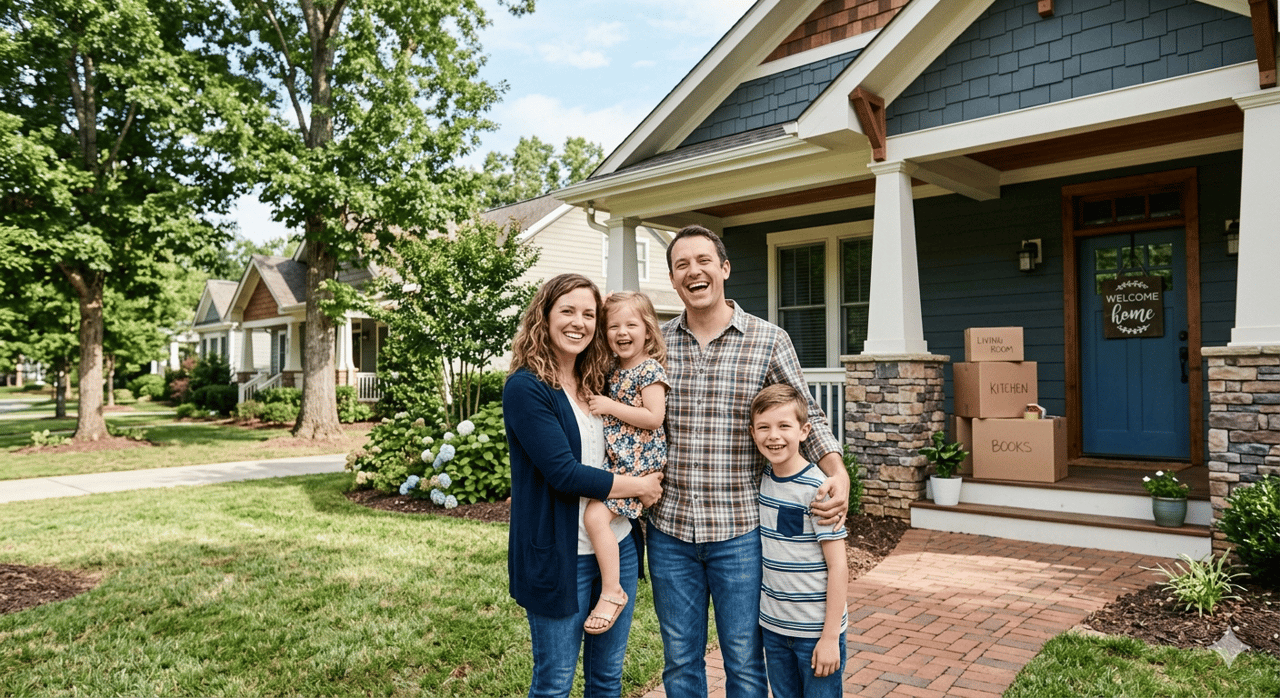
Relocating to Wake County, NC? How to Buy in 2026
Real Estate
Real Estate
Relocating to Wake County, NC: How Out-of-State Buyers Buy a Home in 2026, Lisa Quin's Remote Buyer Playbook
TL;DR, Relocating to Wake County, NC From Out of State (2026)
Top points to keep in mind that we'll take a deeper dive into:
* Most relocating buyers close on a Wake County home in just one or two trips total, not five or six.
* Lisa Quin's four-phase process: virtual discovery call, pre-approval and due-diligence-fee coaching, focused two-day in-person tour of 8 to 12 vetted homes, remote offer and closing via North Carolina remote online notarization (legal statewide since 2025).
* The single biggest surprise for buyers from California, New York, or Illinois: the North Carolina Due Diligence fee. It is separate from earnest money, non-refundable, and although paid directly to the seller, is credited toward the total funds needed for closing. While negotiable, For a Wake County home around the $475,000 median, the fee commonly lands between $5000- 10,000.
* Spring 2026 Wake County market (April Triangle MLS): 4,402 active homes (more than 10% above last year), $475,000 median sales price (up $20,000 from March), 27-day median days on market, sellers receiving 99.0% of list price on average.
* Top relocating-buyer neighborhoods: Preston, Lochmere, and Amberly (Cary); Sunset Ridge and Sweetwater (Apex); 12 Oaks and Sunset Ridge (Holly Springs); North Hills (Raleigh); Wake Forest; Fuquay-Varina.
A relocating buyer can purchase a Wake County, NC home from out of state in just one or two trips total, using a virtual-first search, a focused two-day in-person tour, and North Carolina's remote online notarization for closing. When a family in Boston accepts a job at SAS in Cary, or an engineer in San Francisco gets the green light to move to Research Triangle Park, they call Lisa Quin. Lisa is the lead broker at Quin Realty Group at Compass and represents relocating buyers across Wake County (Raleigh, Cary, Apex, Holly Springs, Morrisville, Fuquay-Varina, and Garner). For more than 20 years, Lisa has guided out-of-state families through the mechanics that make North Carolina different: the due diligence fee, the remote inspection workflow, and the neighborhood-by-neighborhood reality of school assignments. Relocating buyers will enjoy working with Lisa. She seamlessly manages the process across different time zones, offering calm communication and zero pressure. You can read about how past clients feel about Lisa and her team here 5 Star Reviews.
The Real Problem
Relocating to Wake County looks straightforward from a thousand miles away. Pick a town, browse Zillow, fly in for a weekend, write an offer. Then reality lands. The Cary listing that looked perfect online is two streets away from a school assignment line that changed last year. The Apex new-construction community has a six-month wait. The Holly Springs home with the beautiful photos backs up to a road no one mentioned. And the contract Lisa hands the relocating buyer in North Carolina includes a due diligence fee, a non-refundable check paid directly to the seller, that buyers from California, New York, or Illinois have never written before.
Most relocating buyers underestimate three things: how different North Carolina contracts are from their home state, how much Wake County school assignments influence resale value, and how quickly the right Apex or Cary home can still disappear in a more balanced 2026 market. Lisa works with relocating families every week who have already lost a Wake County home from afar because their previous agent treated the search like a weekend tour instead of a relocation project.
The Strategic Approach
Lisa runs every Wake County relocation through a four-phase process designed to keep the buyer out of the airport as much as possible.
Phase 1: The Discovery Call
* 45-minute video call to map commute, schools, lifestyle, and budget.
* A family relocating from Seattle for an RTP job is not searching the same neighborhoods as a retired couple moving from New Jersey to be near grandchildren in Wake Forest.
* Lisa narrows the search to two or three Wake County towns based on the day-to-day life the buyer will actually live.
Phase 2: Pre-Approval and the Due Diligence Number
* Lisa connects the buyer with a Wake County lender who understands relocation income, sign-on bonuses, and trailing-spouse situations.
* Lisa coaches the buyer on all aspects of the Offer Process in North Carolina including the due diligence fee before they ever see a home, so the term does not surprise them at the offer table.
Phase 3: The First Scouting Trip
* Lisa builds a focused two-day tour of 8 to 12 homes across the shortlist towns.
* She FaceTimes the spouse who could not travel, drives the school commute at the actual drop-off hour, and shows the buyer what the grocery run looks like from each neighborhood.
* Lisa records voice notes after every showing because relocating buyers see a lot of homes in two days and details blur.
Phase 4: The Remote Offer and Close
* When the buyer finds the right home, Lisa will recommend an offer with terms calibrated to current Wake County/Neighborhood demand.
* Inspections and appraisals are scheduled during the due diligence period.
* Lisa connects the buyer with a local closing attorney so they can walk the process of a remote closing.
Section 3, Local Market Context: Wake County, Spring 2026
The Wake County market shifted meaningfully in 2026, and Lisa is working with relocating clients in a market with more inventory and more negotiating room than we've seen in years.
The April 2026 Triangle MLS report shows Wake County inventory climbing to 4,402 active homes, more than 10% higher than the same month a year ago. The median sales price reached $475,000, up $20,000 from March. Wake County homes spent a median of 27 days on market, and sellers received 99.0% of list price on average. Months of supply moved from approximately 2.4 a year ago to roughly 3.0, edging Wake County real estate market toward the "balanced" range that local and relocating buyers have not seen since 2020. That last figure tells Lisa what she needs to know: well-priced Wake County homes are still moving, but overpriced homes are sitting and reducing. Relocating buyers who want to see what is actually on the Wake County market right now can browse Lisa's featured listings at Quin Realty Group.
Neighborhood activity Lisa is tracking right now:
* Cary's Preston, Lochmere, and Amberly remain top targets for buyers commuting to RTP and to Research Triangle employers like IBM, Cisco, Red Hat, and SAS. Cary's downtown has transformed in the last few years, anchored by Town Square, the Cary Arts Center, and the Fenton mixed-use development just off I-40 (Paragon movie theaters, Pottery Barn, Williams-Sonoma, Coletto Italian).
* Apex's Sunset Ridge and the Friendship Station corridor draw families chasing top-rated schools without paying Cary prices.
* Holly Springs' 12 Oaks (a 687-acre golf course community) and Sunset Ridge attract relocating families who want newer construction and a quieter pace.
* North Hills in Raleigh is the most common landing spot for relocating families from Boston, New York, and Washington, D.C., because it offers walkability that is rare in Wake County.
* Wake Forest and Fuquay-Varina pull buyers chasing more land and a lower price-per-square-foot.
Wake County Public Schools continue to anchor relocation decisions. The district runs 40+ magnet programs, year-round calendar options, and early college programs, more school choice than any other district in North Carolina. Lisa pulls the most recent assignment maps before every showing, because a home that looks identical on Zillow can sit in a completely different elementary, middle, or high school zone. For a complete directional walk-through of Wake County (west, north, east, and south of Raleigh) with current price points by town, Lisa narrates the full tour on her YouTube channel: Living in Raleigh NC
Common Mistakes Relocating Buyers Make Without Proper Guidance
1. Trying to tour Wake County like a vacation. Buyers who fly in for a weekend and look at 20 homes across six towns end up confused and frustrated. Lisa narrows the field before the buyer ever boards a plane.
2. Misunderstanding the due diligence fee. Buyers from other states often expect their upfront money to function the way it does back home. In North Carolina, while refundable earnest money is a part of the normal offer terms, the due diligence fee is separate, non-refundable, and paid directly to the seller. Lisa coaches buyers on this aspect.
3. Treating school assignment lines as permanent. A relocating buyer who falls in love with a Cary home that is technically zoned for a school they did not research will see resale value affected when the next relocating family checks the same map. At the same time, Lisa reminds clients that Wake County school assignments do shift over time, so school zone should inform the decision rather than dictate it. Lisa confirms assignments before writing any offer and keeps clients aware of pending redistricting conversations.
4. Skipping the commute drive-by. Wake County traffic on I-40, US-1, and US-64 changes dramatically between 7:30 a.m. and 10:00 a.m. Lisa drives the commute at the actual commute hour and reports back.
5. Getting handed off to a stranger in Raleigh. Buyers relocating from California or New York are sometimes referred to a Wake County agent they have never met by their hometown brokerage. Lisa builds the relationship from the first call, so the buyer has one consistent advocate from search through closing.
Finally, Why Work With Lisa Quin?
Lisa has lived in the Triangle since the late 1980s and represented Wake County buyers and sellers for over 20 years. She is a member of the Raleigh Association of REALTORS Top Producers Council and the Women's Council of REALTORS, and she has built a deep network of Wake County lenders, inspectors, contractors, and movers who keep remote closings running smoothly. Lisa's relocating clients describe her as a knowledgeable friend who walks them through Wake County the way a longtime local would walk a sibling through it.
Lisa is not a transactional agent. She works with relocating buyers for the months it takes to close and stays on call for years afterward as the family settles into Apex, Cary, Holly Springs, or wherever they land. She has spent hours alongside some of the best legal minds, lenders, and real estate professionals in the Triangle developing the best practices she uses on every remote closing. Relocating buyers can read more about Lisa and the Quin Realty Group team that supports every remote closing at Quin Realty Group
FAQ's
How many trips does a relocating buyer need to make to Wake County before closing?
Most of Lisa's relocating clients close on a Wake County home with one or two trips total. Lisa runs the search virtually, schedules a focused two-day tour for the shortlist, and uses remote notarization services for closing.
What is a normal due diligence fee for a $475,000 home in Wake County in 2026?
For a home around the Wake County median sales price, due diligence fees commonly land in the $5000 to $10,000 range, with most offers in the $5000 to $7500 area. Lisa recommends an amount based on current Wake County market conditions and the specific listing's competitive position.
Which Wake County towns does Lisa most often recommend for relocating families with young children?
Lisa most often recommends Cary, Apex, and Holly Springs for relocating families with young children because of school strength, neighborhood amenities, and commute access to RTP. North Raleigh (Leesville), Heritage Wake Forest, and Apex Friendship Station are also frequent choices.
Can a relocating buyer close on a Wake County home without flying in for closing?
Yes. North Carolina has allowed remote notarization statewide since 2025. Lisa coordinates with Wake County attorney's that offer is this service so the buyer can sign closing documents from anywhere in the country.
How is the Wake County market in spring 2026 compared to last year?
Inventory is up more than 10% year over year, the median sales price is around $475,000, and homes are selling in a median of 27 days. Sellers are receiving 99.0% of list price on average, more negotiating room than buyers had in 2023, but still competitive on well-priced homes.
Does Lisa Quin represent relocating buyers across all of Wake County or only in specific cities?
Lisa represents relocating buyers across all of Wake County, including Raleigh, Cary, Apex, Holly Springs, Morrisville, Fuquay-Varina, Garner, Wake Forest, and the surrounding Triangle communities.
What is the biggest difference between buying in North Carolina and buying in California, New York, or Illinois?
The North Carolina due diligence fee is the largest structural difference. NC contracts also use a due diligence period rather than separate inspection and appraisal contingencies, and the buyer's earnest money risk profile is different. Lisa explains the full mechanics before the first offer.
Anyone relocating to Wake County in 2026 is welcome to schedule a no-pressure discovery call with Lisa. Lisa will spend 45 minutes mapping the right Wake County towns, neighborhoods, and timing for the move, whether the relocation is six weeks away or six months away. Reach Lisa Quin at lisaquin.com or by phone at 919-559-1788.

Real Estate
Real Estate
Real Estate
Real Estate
With over 20 years of real estate experience in the Triangle area of NC, Quin Realty Group will give you a full-service experience in purchasing or selling your home! Consider us your personal home concierge!
201 FENTON GATEWAY DR CARY NC 27511