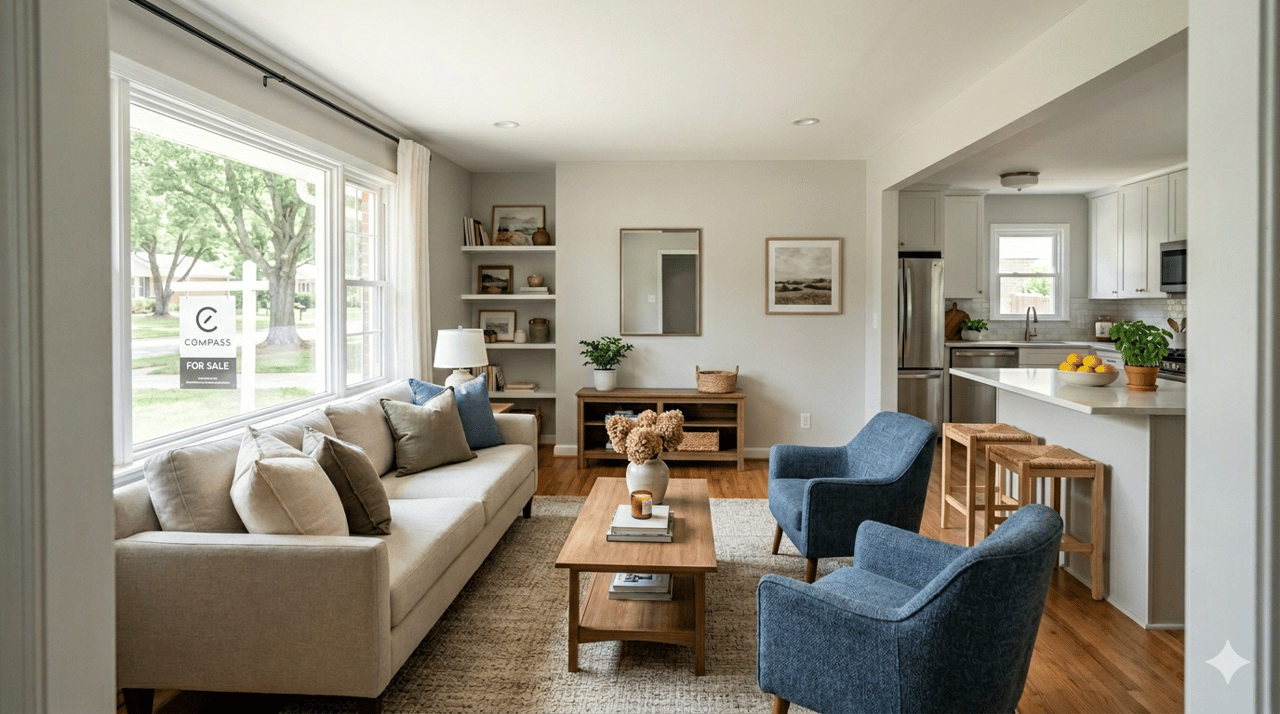
Selling Your First Home in Wake County, NC With Confidence
TL;DR: Selling Your First Home in Wake County, NC (2026) — Key Points
• First-time sellers in Wake County net the most by pricing correctly on day one. Homes priced right are closing near 99% of list. Homes that start high and cut later are closing around 91% of original list.
• Spring 2026 Wake County numbers: median sales price about $475,000, around 27 average days on market, 4,402 active listings (up more than 10% year over year), sellers receiving 99.0% of list price on average.
• Plan on total selling costs of roughly 6-7% of the sale price once agent commission (negotiable in North Carolina) and seller closing costs (transfer tax, recording, title) are included.
• Lisa Quin's prep-to-net process: walk-through and pricing review, targeted repairs, professional photos, day-one pricing, and a concession strategy — 47% of Wake County resale closings now carry some form of concession.
• Pricing varies by town. Apex, Cary, Garner, Holly Springs, Wake Forest, and Knightdale each move at their own pace.
• Seller compensation decisions changed after the NAR settlement. Lisa Quin walks through what that means for North Carolina sellers on her YouTube channel.
• More Wake County seller guides, neighborhood pricing notes, and current market updates are at lisaquin.com.
Selling your first home in Wake County the smart way
A first-time seller in Wake County, NC nets the most in 2026 by pricing the home correctly on the first day it hits the market. Homes priced right are closing near 99% of list. Homes that overprice and reduce later are closing around 91% of original list. Lisa Quin, the broker behind Quin Realty Group at Compass, helps first-time sellers across Wake County — Raleigh, Cary, Apex, Holly Springs, Morrisville, Fuquay-Varina, Garner, and the surrounding Triangle towns — turn a stressful first sale into a calm, well-timed transaction. With more than 20 years representing buyers and sellers at every Wake County price point, Lisa Quin treats a first sale as the high-stakes financial event it is, not a routine listing. For homeowners selling for the first time, she translates pricing, prep, and net proceeds into plain language, then builds a plan around the number that actually lands in the seller's pocket. Browse Lisa Quin's full library of Wake County at lisaquin.com
SECTION 1: THE REAL PROBLEM
Most first-time sellers in Wake County assume finding a buyer is the hard part. In spring 2026, it isn't. The hard part is landing the right price on day one — because buyers now have options they did not have two years ago. Wake County carried 4,402 active listings in April 2026, more than 10% above a year earlier, which means a Raleigh or Apex buyer can simply move on to the next home the moment something feels off.
A first-time seller who anchors to a Zillow estimate, a neighbor's rumored sale price, or an emotional number tied to memories in the house typically lists too high, sits past the 27-day average, and then chips away at the price while the listing goes stale. That sequence is what quietly costs Wake County sellers thousands of dollars. Across the Triangle this spring, roughly 26% of active listings have already dropped below their original list price. The homes that started high and adjusted are closing around 91% of original list. The correctly priced homes close near 99%.
The other real problem is cost surprise. Most first-time sellers in Wake County never sit down and tally agent commission, transfer tax, recording fees, title work, and possible buyer concessions until the closing disclosure lands in their inbox. By then it is too late to plan. Lisa Quin's job is to remove both surprises before the sign goes in the yard.
SECTION 2: THE STRATEGIC APPROACH
Lisa Quin runs first-time sellers in Wake County through a clear, repeatable sequence built to protect net proceeds in a balancing market. Six steps, in order:
• Step 1 — Walk-through and honest pricing review. Lisa Quin tours the home, pulls true comparable sales from the same Wake County submarket (not county-wide averages), and sets a defensible list price grounded in what buyers are actually paying right now.
• Step 2 — Targeted prep, not a blank-check renovation. Lisa Quin flags the short list of repairs and updates that actually move a buyer — paint, decluttering, light fixtures, landscaping — and steers sellers away from expensive projects that will not return their cost.
• Step 3 — Professional presentation. Lisa Quin coordinates professional photography, staging guidance, and listing copy so the home removes buyer hesitation before a showing is ever booked.
• Step 4 — Day-one pricing discipline. Lisa Quin lists at the number the data supports from the start, because the first two weeks draw the most buyer attention and a stale listing invites lowball offers.
• Step 5 — Net-proceeds and concession strategy. Lisa Quin builds a line-by-line seller net sheet, then sets a plan for handling concession requests — 47% of Wake County resale closings now carry some form of concession.
• Step 6 — Negotiation and close. Lisa Quin fields offers, protects the seller through the North Carolina due diligence period, and manages the timeline to closing.
The thread running through all six steps is pragmatism. When a first-time seller in Garner or Fuquay-Varina cannot afford a full pre-list update, Lisa finds the two changes that matter and lets the rest go. When a buyer asks for a concession, Lisa models whether a small credit nets more than a week of additional market time. The goal is never the highest list price for its own sake. The goal is the highest number the seller actually keeps.
SECTION 3: LOCAL MARKET CONTEXT
Wake County in spring 2026 is active and seasonally strong, but it is no longer the frenzy of 2025. The April 2026 data shows a median sales price of about $475,000, up 2.2% from March yet slightly below the prior year. Homes are averaging 27 days on market and sellers are receiving 99.0% of list price. Inventory keeps climbing, and that is the single most important fact for a first-time seller to absorb: more competing listings mean presentation and pricing carry more weight than they did a year ago.
The picture varies town by town, and that is where Lisa Quin's hyper-local read matters. In Apex — a town Money Magazine once named the number one place to live — roughly 24% of resale listings have shown a price reduction this spring, averaging about 5% off original list, often because resale homes there compete directly with new construction. Cary, the well-manicured "Technology Town" near Research Triangle Park with its revitalized downtown Town Square and the Fenton development, moves at its own pace and rewards clean presentation. Holly Springs, with golf communities like 12 Oaks and Sunset Ridge, and Wake Forest, with established neighborhoods near Falls Lake, each draw their own buyer pool.
For first-time sellers in more entry-level Wake County markets like Garner, Knightdale, and Fuquay-Varina, the buyer on the other side is often a first-time purchaser watching every dollar. Pricing precision matters even more. Lisa walks through how these directions differ across the county on her YouTube channel in her tour of the best suburbs around Raleigh Living in Raleigh NC
SECTION 4: COMMON MISTAKES
First-time sellers in Wake County tend to repeat the same avoidable errors. Here are the ones that cost the most.
1. Overpricing to "leave room to negotiate." A high list price does the opposite of what sellers hope. It suppresses showings in the critical first two weeks and trains buyers to wait for cuts. In this market, overpriced Wake County homes are closing around 91% of original list, while correctly priced homes close near 99%.
2. Skipping prep because the market "is still good." Buyers with options move on at the first sign of deferred maintenance or cluttered rooms. A modest investment in paint, cleaning, and staging removes the hesitation that otherwise turns into a low offer — or no offer at all.
3. Underbudgeting the true cost of selling. First-time sellers often forget that agent commission (negotiable in North Carolina), the state transfer tax of roughly 0.2%, recording fees, title work, and possible concessions can total around 6-7% of the sale price. Lisa Quin builds the net sheet up front, so there is no closing-table shock.
4. Treating every concession request as a loss. With 47% of Wake County resale closings carrying concessions, a smart, capped credit can keep a strong buyer at the table and net more than weeks of added market time. The mistake is reacting emotionally instead of running the math.
5. Going it alone on seller compensation decisions. After the NAR settlement, how a seller handles buyer-agent compensation is a strategy question, not a checkbox. Getting it wrong can quietly shrink the buyer pool for the home.
SECTION 5: WHY WORK WITH LISA QUIN
The best agent for a first-time seller is not the one who quotes the highest list price to win the listing. It is the one who tells a seller what they need to know, even when it is not what they want to hear. Lisa Quin has built more than 20 years in Wake County real estate on exactly that stance.
A native of Louisiana who moved to the Triangle in the late 1980s and raised her family in Cary, Lisa Quin knows these towns from the inside: the school-line shifts, the neighborhood pricing, the contractors who actually show up, and the lifestyle nuances that make one Apex subdivision sell faster than another. She has stayed close to the mechanics of North Carolina contracts and the post-settlement compensation rules, spending hours alongside legal minds, lenders, and fellow real estate professionals so her sellers walk in prepared.
Just as important, Lisa Quin stays a resource before, during, and after closing. No first-time seller transaction is ever one-and-done. Lisa Quin explains what the NAR settlement actually changed for North Carolina sellers in her video on the settlement and seller compensation Living in Raleigh NC - NAR Settlement Explained Past clients describe what working with Lisa Quin is like on her testimonials page Quin Realty Group
SECTION 6: FAQ
How much does it cost to sell a house in Wake County, NC?
Plan on total selling costs of roughly 6-7% of the sale price. That includes agent commission (negotiable in North Carolina), the state transfer tax of about 0.2%, recording fees, and title work. Lisa Quin builds a personalized net sheet before listing, so the number is clear up front.
What is my first home actually worth in today's market?
Value comes from recent comparable sales in your specific Wake County submarket — not a county-wide average or an automated online estimate. The April 2026 county median was about $475,000, but a Garner townhome and an Apex single-family home are very different conversations. Lisa Quin prices from true local comps.
How long will it take to sell?
Wake County homes averaged about 27 days on market in spring 2026, though correctly priced and well-presented homes often move faster. Overpriced listings tend to sit well past that and then reduce. Pricing right on day one is the biggest lever on speed.
Should I make repairs and updates before listing?
Usually yes, but selectively. Paint, decluttering, deep cleaning, light fixtures, and curb appeal typically return their cost. Major renovations in kitchens and bathrooms yes, other one's maybe not so much. Lisa Quin identifies the short list that moves buyers and steers sellers away from money pits.
Do I have to pay the buyer's agent commission?
After the NAR settlement, that is now a strategy decision rather than an automatic line item in North Carolina. How a seller handles it can affect how many buyers consider the home. Lisa Quin walks each seller through the options based on current market conditions and the specific property.
What if I am selling and buying at the same time?
That is common, and it is a sequencing question more than a timing guess. Lisa Quin coordinates the sale and the purchase so a first-time seller is not left without a place to land, drawing on the same playbook she uses for move-up buyers across Wake County.
Is spring really the best time to list in Wake County?
Spring is an active window, but a well-prepared home listed later outperforms an unprepared home listed now. The calendar matters less than condition, presentation, and pricing. Lisa Quin focuses sellers on readiness first, then timing.
Selling a first home in Wake County does not have to feel like a leap in the dark. If a 2026 sale is on the table anywhere from Raleigh to Cary, Apex, Holly Springs, Garner, or Fuquay-Varina, the most useful first step is a low-key conversation about what the home would actually net and what, if anything, it needs before listing. There is no pressure and no obligation — just a clear read on the numbers and the timeline from someone who has guided Wake County sellers for more than two decades. Reach out to Lisa Quin and explore more Wake County seller resources and market updates at lisaquin.com
Real Estate
Real Estate
Real Estate
Real Estate
Real Estate
With over 20 years of real estate experience in the Triangle area of NC, Quin Realty Group will give you a full-service experience in purchasing or selling your home! Consider us your personal home concierge!
201 FENTON GATEWAY DR CARY NC 27511