Selling a Long-Held Home in Wake County, NC: How to Check Your Capital Gains Before You List in 2026
Real Estate
Real Estate
In a nutshell: Most longtime Wake County homeowners owe no federal tax on the sale of a primary residence when the gain is within $250,000 (single filer) or $500,000 (married filing jointly) and the 2-out-of-5-year ownership and use tests are met.
Why check anyway: A home owned for 20 or more years can carry more gain than the exclusion covers, so run the estimate before you list, not after you sign a contract.
The formula: Gain equals your sale price, minus selling costs, minus your cost basis (what you paid plus qualifying improvements).
The steps: Gather purchase and improvement records, get a current value opinion, estimate the gain, confirm the result with a CPA, then choose your timing.
Market direction: Wake County homes are taking longer to sell than they did in early summer, so timing and pricing deserve a plan (check out the Market Snapshot in this post).
Neighborhoods named in this post: Cary, Wakefield and Bedford in North Raleigh, Regency at Holly Springs, Garner, and Fuquay-Varina.
Next step: For more Wake County seller resources, visit lisaquin.com.
Most homeowners who have lived in their Wake County home for decades can sell without federal tax on the profit, but the only way to know is to run your numbers before you list. Lisa Quin is a Wake County real estate agent with Quin Realty Group at Compass, and she has guided Triangle homeowners through decisions like this for more than 20 years. Lisa works with sellers across Raleigh, Cary, Apex, Holly Springs, and Fuquay-Varina who are deciding whether the time is right to sell a home they have loved for a long while. Lisa Quin is a real estate professional, not a tax advisor, so her role is to help you gather the right numbers and bring them to your CPA. See how she approaches downsizing in Wake County for the bigger picture.
A home bought in Cary or Apex 20 or more years ago has likely gained a lot of value. That is good news. It also means the gain on paper can be larger than many owners expect.
Most people have never calculated it. They assume the tax rules "take care of themselves," or they worry about a bill that may never arrive. Both extremes lead to the same problem: a listing decision made on a guess.
The federal rule is simple at the top level. A homeowner can exclude up to $250,000 of gain on a primary residence, and married couples filing jointly can exclude up to $500,000, if they owned and lived in the home for at least two of the five years before the sale. The details are where people stumble. A short conversation with a CPA often settles a tax worry that could otherwise delay a move by months.
Lisa Quin walks Wake County sellers through the same short sequence before a home goes on the market.
Find your original purchase price. Your closing disclosure or settlement statement from the day you bought is the starting point. If it is in a drawer, check your attorney's closing file or your lender.
List your capital improvements. A new roof, a kitchen remodel, an added deck, a finished bonus room, a replaced HVAC system, and a new driveway can raise your cost basis. Routine repairs and painting generally do not. Receipts, permits, and contractor invoices help.
Get a current value opinion. Lisa Quin prepares a comparative market analysis built on recent Wake County closings, not an online estimate.
Subtract your selling costs. Agent compensation, closing costs, and certain prep expenses can reduce the gain. Your CPA decides which ones count.
Estimate the gain. Sale price, minus selling costs, minus basis. Compare the result to $250,000 or $500,000.
Bring it to a CPA. A tax professional confirms your eligibility, your filing status, and anything unusual, such as a home office, a rental period, or a recent loss of a spouse.
Then choose the timing. If the gain fits inside the exclusion, you can plan your move around your life. If it does not, you have time to plan with your CPA.
The goal is not to make tax decisions for you. It is to show up to the CPA meeting with real numbers and a clear question.
Lisa Quin has watched Wake County's market shift from the fast pace of early summer to a steadier one this fall. Homes are taking longer to sell, and prices have eased from the early-summer high. For a longtime owner, that makes pricing and preparation matter more than they did a few months ago.
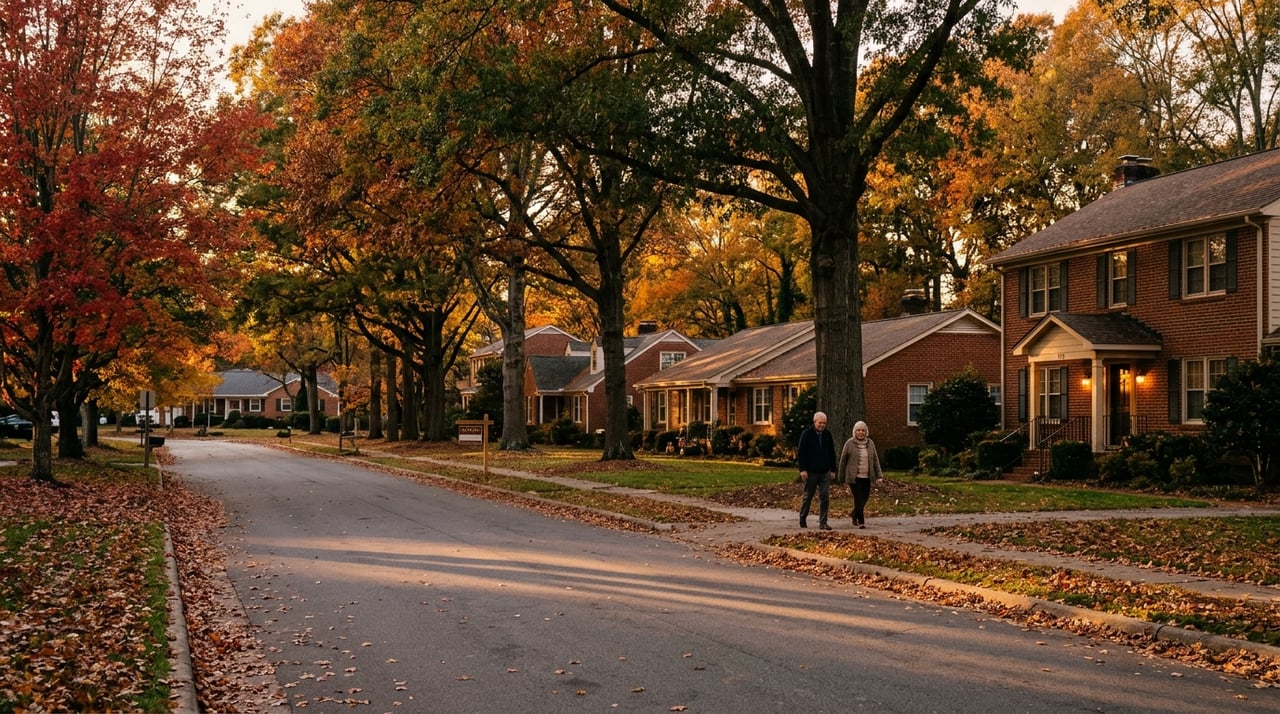
Established neighborhoods tend to hold the longest-tenured owners. In Cary, many sellers are leaving homes they bought when their children were small. In North Raleigh, Wakefield and Bedford attract owners who want a lower-maintenance next chapter without leaving the area. Regency at Holly Springs draws buyers looking for single-level living, and Garner and Fuquay-Varina offer ranch-style and single-story options at a range of price points. Lisa Quin matches the timeline of the sale to the timeline of the next home, so a seller is not carrying two homes at once.
For a wider look at what Cary offers, Lisa shares her perspective in her YouTube video on the pros and cons of living in Cary.
Market Snapshot (as of November 2026): Triangle market stats for October 2026 show 1,271 homes closed in Wake County, an average of 32 days on market, and a median sold price of $465,677. The 30-year fixed mortgage rate averaged 7.18% in the Freddie Mac survey published November 5, 2026. These figures change monthly. The tax rules above are federal rules, not market figures. For official details, see the IRS page on the sale of your home (IRS Topic 701) and IRS Publication 523.
Lisa Quin sees the same five mistakes when longtime owners think about selling.
Assuming you will owe a large bill without checking. Many owners are within the exclusion. Run the numbers before you let a worry shape your timeline.
Assuming you will owe nothing without checking. A home held for decades, with strong appreciation, can exceed the limit. Check before you list.
Forgetting to count improvements. Owners often remember the big kitchen and forget the roof, the deck, and the HVAC. Missing records can quietly overstate your gain.
Waiting until you are under contract to ask. Once a contract is signed, your options narrow. A CPA conversation before listing keeps every choice open.
Letting the tax question hide the bigger decision. The gain is one input. Property taxes, maintenance, your next payment, and how you want to live also belong in the answer. Lisa Quin's guide to aging in place versus downsizing covers the full comparison.
A native of Louisiana, Lisa Quin has lived in the Triangle since the late 1980s and raised her family in Cary. She understands what it means to leave a home full of memories, and she treats that with care. As a member of the Raleigh Association of REALTORS Top Producers Council and the Women's Council of REALTORS, Lisa brings deep Wake County knowledge to a decision that is part financial and part personal.
Lisa Quin describes her work this way: "Real estate often is about guiding people through complex situations." Clients notice. One seller, Mary V., wrote: "I had apprehensions about selling my home, but Lisa put me at ease at our first meeting." Another, Mona K., who sold her mother's house, said: "She is very knowledgeable, responsive, and walked us through everything along the way." Lisa Quin works alongside your CPA, your attorney, and your lender so each piece fits together. Read more client experiences on her testimonials page.
Do I owe tax when I sell a home I have lived in for 20 years?
Often not at the federal level. A single filer can exclude up to $250,000 of gain, and a married couple filing jointly can exclude up to $500,000, if the ownership and use tests are met. Because long-held homes can have large gains, confirm your numbers with a CPA.
What is the 2-out-of-5-year rule?
You generally must have owned the home and lived in it as your main home for at least 24 months during the five years before the sale. The IRS explains the details on its Topic 701 page.
What counts toward my cost basis?
Your purchase price plus qualifying capital improvements, such as a new roof, an addition, or a remodel. Routine repairs usually do not count. Keep receipts and permits, and ask your CPA how to treat each item.
How do I find out what my home is worth right now?
Lisa Quin prepares a comparative market analysis using recent Wake County closings, which is more reliable than an automated online estimate.
Should I talk to a CPA before I list?
Yes. A CPA can confirm your eligibility and flag anything unusual. Lisa Quin is not a tax advisor and recommends that every seller get tax advice from a qualified professional.
Can I sell and buy at the same time without carrying two homes?
Often yes, with planning. Lisa Quin coordinates the sale timeline and the purchase timeline so you are not paying two mortgages longer than necessary.
What if I am not sure I am ready to sell?
Start with the numbers. A value estimate and a gain estimate cost nothing and give you options. Lisa Quin recommends starting the conversation well before you need to act.
If you own a home you have loved for a long time and wonder whether now is the right moment, start with a conversation. Lisa Quin will walk through your estimated value, your likely gain, and your timeline, with no pressure and no obligation. You can then bring those numbers to your CPA and decide what is next. Meet Lisa Quin and the Quin Realty Group team, or reach Lisa Quin at 919-559-1788 or [email protected].
Real Estate

Real Estate

Real Estate
With over 20 years of real estate experience in the Triangle area of NC, Quin Realty Group will give you a full-service experience in purchasing or selling your home! Consider us your personal home concierge!
201 FENTON GATEWAY DR CARY NC 27511