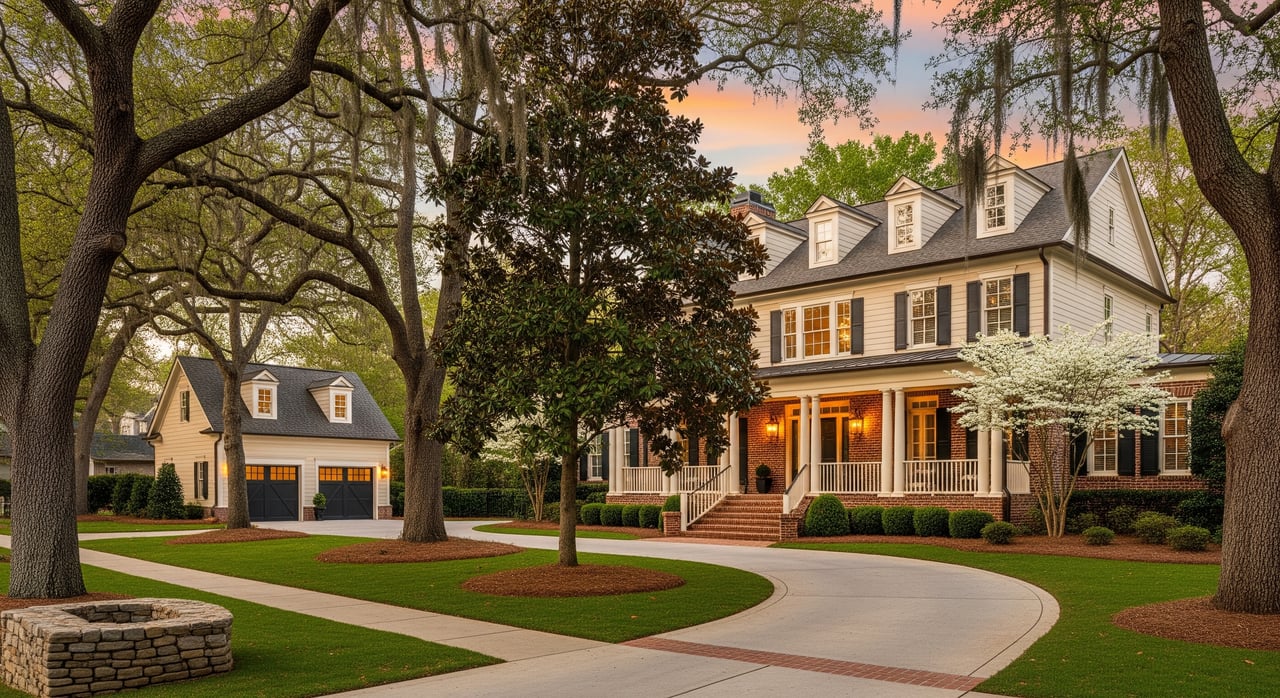
Buyer’s Apex NC Neighborhoods Guide to Lifestyle Fits
Trying to make sense of how Apex neighborhoods differ as a buyer? You are not alone. Apex offers everything from a walkable historic core to new-build communities on the edge of town, and each area feels a little different day to day. In this guide, you will learn how neighborhood types compare on lifestyle, housing, parks, and commutes so you can zero in on areas that fit your routine. Let’s dive in.
Apex sits in southwestern Wake County, just south of Cary and west of Holly Springs. You are within easy reach of Research Triangle Park, downtown Raleigh, and RDU Airport, with Jordan Lake to the southwest for boating and hiking. Growth has followed major roads like US 64, NC 55, and NC 540, so access to these corridors is a key factor in daily convenience. New homes tend to cluster on the town’s edges, while the older core around downtown remains compact and walkable.
Organizing Apex by neighborhood “types” helps you compare lifestyle and tradeoffs without getting lost in subdivision names. Here is what to expect and who each type tends to serve well.
You will find a walkable Main Street feel with historic homes on smaller lots, local restaurants and shops, and regular community events. Housing includes renovated cottages and bungalows, a few condos or lofts above retail, and some newer infill townhomes. Walk and bike access to parks and greenways is common, and errands can be short trips.
Many mature subdivisions were built in the 1990s through the 2010s. Expect tree-lined streets, single-family homes with common lot sizes around 0.15 to 0.5 acres, and neighborhood pools or pocket parks in some areas. These communities often sit near shopping corridors with a quick drive to schools and recreation.
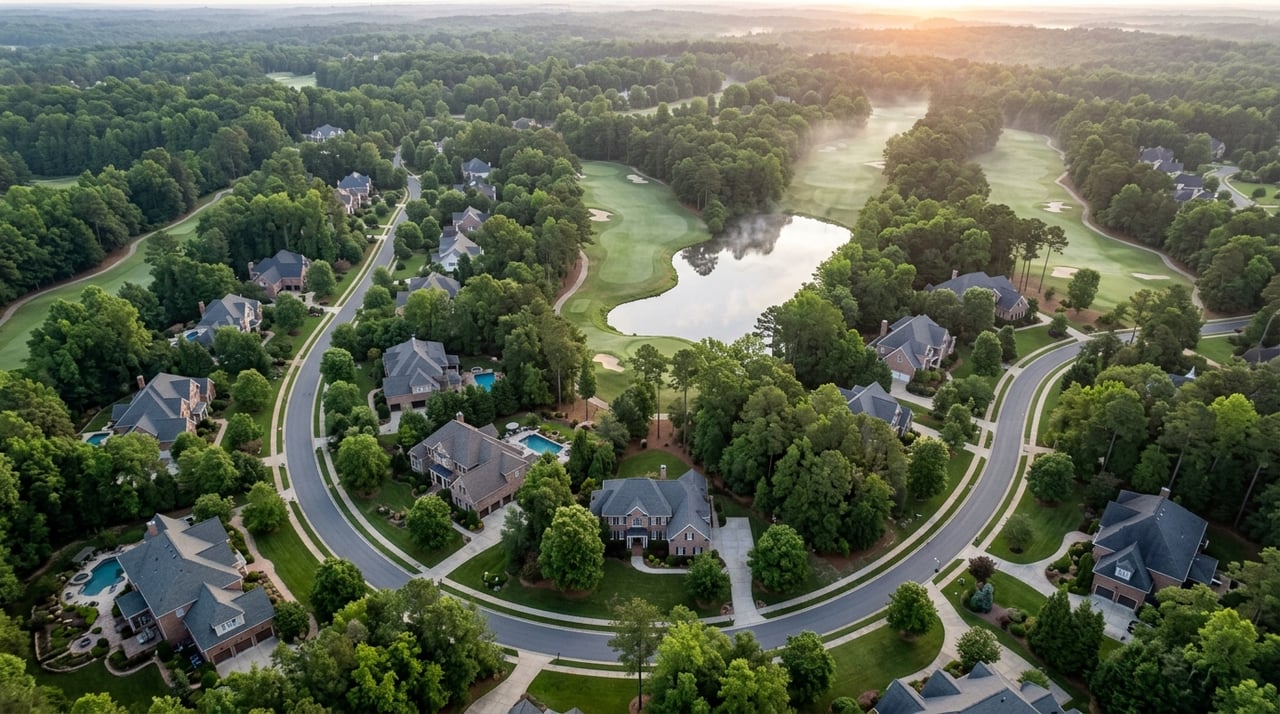
Larger planned developments often include clubhouses, pools, playgrounds, trails, and community centers. Housing can range from townhomes to larger single-family and sometimes custom or luxury builds. Many daily recreation needs are met within the neighborhood, which can be a significant quality-of-life boost.
On the town’s periphery you will find contemporary floor plans, open layouts, and ongoing construction phases. Some communities include townhomes, while many offer larger single-family homes or larger lots than you might see closer in. Proximity to NC 540 or US 64 can be a plus for regional commuting.
If you picture more privacy and elbow room, look at areas with 1 acre or more near the Apex boundary. Housing can range from older farmhouses to newer custom builds. Shopping, schools, and town services can be a longer drive, but the tradeoff is space and a semi-rural feel.
Apex maintains a connected system of parks and greenways. Downtown and established neighborhoods often have easier walk or bike access to pocket parks and trail segments. For an overview of facilities, consult the town’s parks map and facility listings, then confirm exact locations relative to homes you are considering.
Jordan Lake is a major regional draw for boating, fishing, camping, and hiking. To plan lake access, review the N.C. Division of Parks and Recreation’s Jordan Lake page for state recreation areas and rules, and use the USACE Jordan Lake maps for additional boat ramps and day-use sites:
Neighborhoods on the southwest side of Apex generally offer shorter drives to popular launch sites. Areas nearer to downtown or along the northern and eastern sides may trade a longer lake drive for closer access to shops, dining, and community events.
Apex residents commonly commute to RTP, Cary, Raleigh, Durham, or RDU. Your commute depends heavily on proximity to US 64, NC 55, and NC 540. Neighborhoods adjacent to these corridors often reach highways faster but can experience higher traffic and some road noise.
Regional bus service is provided by GoTriangle. If you plan to use transit, check current routes, timetables, and park-and-ride options on the GoTriangle site. For most suburban trips, driving remains common, but those near downtown Apex can walk for many daily errands and dining.
Here is a simple commute research checklist to use when comparing neighborhoods:
Most of Apex is single-family detached housing, with townhomes and some apartments closer to commercial corridors and downtown. The historic core features late 19th to mid 20th-century homes, many updated over time. Suburban stock from the 1990s to 2010s is widespread, while new construction continues on the edges.
Lot sizes differ by area and era. Downtown lots tend to be smaller than 0.25 acre. Established suburbs often range from about 0.15 to 0.5 acres, and some edge subdivisions or rural areas offer 1 acre or more. To confirm lot size, year built, and assessed values for specific properties, use Wake County property records.
Market prices shift quickly based on interest rates, inventory, and micro-location. When you compare neighborhoods, consider ranges by housing type instead of relying on a single median. Your agent can pull current, date-stamped sales data from the local MLS to help you evaluate value and trends in the areas you like.
Apex is served by the Wake County Public School System. School assignments vary by address and can change with enrollment balancing. Always confirm current assignments using the Wake County school assignment tool, and review official report cards for performance and enrollment data.
Municipal services like trash and recycling, and HOA rules, differ by neighborhood. If you are eyeing a home with an HOA, request covenants and budgets to understand what is covered. For future development, check current planning and zoning agendas and any recently approved site plans that could influence traffic or nearby land use.
If you are narrowing your search, use this quick process:
When you approach Apex by neighborhood type and daily rhythm, the right areas begin to stand out. A short list of 2 to 3 target zones is often enough to focus weekend tours and make a confident offer when the right home appears.
If you want a tailored short list based on your commute, budget, and lifestyle, our team is here to help. We will map your day-to-day routine, test commutes, pull fresh neighborhood comps, and preview homes so you can move with confidence. Start a conversation with Quin Realty Group and get a local plan for your Apex search.

Real Estate

Real Estate
Real Estate

Real Estate
With over 20 years of real estate experience in the Triangle area of NC, Quin Realty Group will give you a full-service experience in purchasing or selling your home! Consider us your personal home concierge!
201 FENTON GATEWAY DR CARY NC 27511