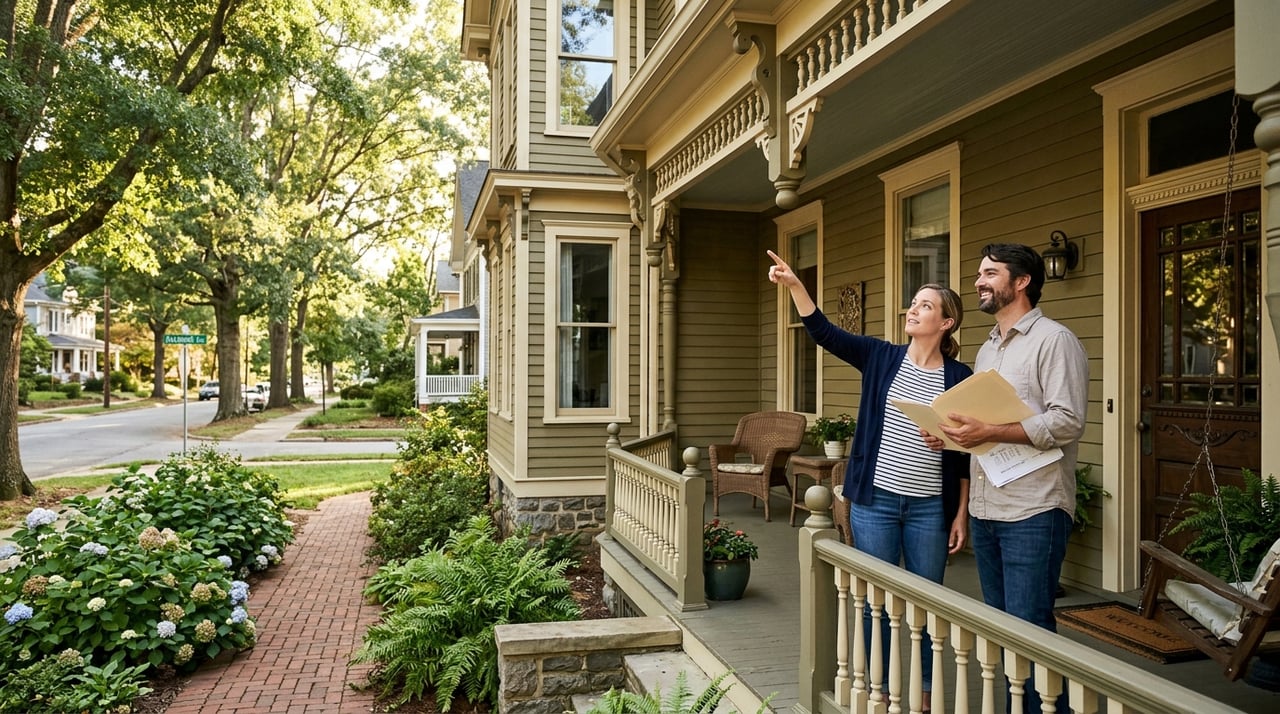
Buying a Historic Home in Raleigh, NC: What Historic District Rules Mean Before You Buy in 2026
Real Estate
Real Estate
TL;DR (Buying a Historic Home in Raleigh) (2026)
If a Raleigh home sits in one of the city’s eight local historic districts, almost any exterior change, from windows and porches to paint color, fences, and additions, needs a Certificate of Appropriateness (COA) before work starts. Interiors are not reviewed.
The eight local districts are Oakwood, Boylan Heights, Blount Street, Capitol Square, Moore Square, Prince Hall, Glenwood-Brooklyn, and Oberlin Village.
Minor Work COAs are approved by city staff in about 10 business days. Major Work COAs go to the Raleigh Historic Development Commission’s committee, which meets monthly.
A buyer under contract can apply for a COA, so a planned renovation can be tested before the purchase closes.
Homes that are only on the National Register of Historic Places do not need a COA, and owner-occupied National Register homes may qualify for a 15% NC rehabilitation tax credit (up to $22,500).
Market backdrop: Wake County’s median sale price was $440,000 in August 2026, 30-year rates crossed 7% in late September, and historic Oakwood homes typically trade from the mid-$600,000s to well over $1.5 million.
More Wake County buyer resources are at lisaquin.com.
Buying a historic home in Raleigh means accepting that the exterior belongs partly to the neighborhood: inside Raleigh’s eight local historic districts, nearly every outside change needs a Certificate of Appropriateness before work begins, so the smartest buyers confirm what they can change before they close, not after. Lisa Quin, a Compass agent with Quin Realty Group, has spent more than 20 years helping Wake County buyers and sellers, including owners of historic homes in and around downtown Raleigh. A Louisiana native who has called the Triangle home since the late 1980s, Lisa knows these porches and oak-lined streets as a neighbor, not a visitor. This guide explains what the rules mean in plain language, how to plan a renovation around them, and where the real risks sit. For more Wake County buyer guides, start at lisaquin.com.
Most buyers fall for a historic home on the porch. The heart-pine floors, the tall windows, the century-old oaks. Then a quiet worry shows up: what will a new owner actually be allowed to do with this house?
That worry is fair. Many buyers arrive with a plan already in mind. A rear addition for a growing household. New windows to cut the power bill. A fresh paint color, a taller fence, a screened porch. In a Raleigh local historic district, every one of those is an exterior change, and every one needs city approval first.
The problem is not the rules themselves. Most owners live with them happily, and the rules are a big part of why these streets still look the way they do. The problem is finding out too late. A buyer who closes first and asks questions second can end up with a project that takes months longer, costs more, or gets redesigned. Lisa Quin’s role is to move those questions to the front of the process, while the buyer still has every option open.
Lisa Quin walks historic home buyers through a simple sequence so the rules shape the plan instead of surprising it:
Confirm the designation first. Check whether the property is in a local historic district (a Historic Overlay District), is a Raleigh Historic Landmark, or is only listed on the National Register. The City of Raleigh’s iMAPS tool shows this, and the difference is big: National Register status alone does not require a COA.
Write down the plan before the offer. List every exterior change on the wish list: windows, doors, siding, roof material, porch, deck, fence, driveway, paint color, additions, and tree removal. Interior renovations are not part of COA review.
Sort each item into Minor Work or Major Work. Minor Work, like many repairs and smaller changes, is approved by city staff in about 10 business days. Larger changes, like additions or replacing original features, typically go to the monthly COA Committee meeting.
Read the Design Guidelines and the district’s history. Raleigh’s Design Guidelines for Historic Districts and Landmarks drive every decision, and each district has its own character. The guidelines look for congruity with the neighborhood, not a copy of the past.
Use the contract window. North Carolina lets a buyer who holds a purchase contract apply for a COA. For a major project, that means the idea can be tested with preservation staff before the purchase closes.
Budget for the right trades. Historic homes reward contractors who know old-growth wood, plaster, and wood windows. Lisa’s network of trusted local pros helps buyers price the real cost of the plan.
Check tax credit eligibility. Owner-occupied homes listed on the National Register, individually or as contributing buildings in a district, may qualify for North Carolina’s 15% rehabilitation tax credit.
This is the pragmatic side of Lisa’s work. Clients jokingly call her “Dr. Quin Medicine Woman,” because when a problem needs solving, she and her team work every angle. With a historic home, that means turning an uncertain renovation plan into a clear yes, a redesign, or a reason to keep looking.
The broader Wake County market gives historic buyers more room to be careful this fall. Wake County’s median sale price was $440,000 in August 2026, down from $458,500 in July, according to the Wake County Register of Deeds. Active inventory has climbed to roughly 8,800 listings, about three to four months of supply, and typical days on market run roughly 38 to 53 days. Rates moved the other way: Freddie Mac’s 30-year fixed average hit 7.03% on September 24, 2026, the first time above 7% since January 2025. More time and more choice help a buyer do the homework a historic home requires.
Historic districts, though, play by their own supply rules. Oakwood, Raleigh’s oldest neighborhood just north and east of downtown, might see only one or two listings in a given month. Oakwood homes typically trade from the mid-$600,000s to well over $1.5 million, depending on size, condition, and how much restoration has been done. With so few sales, pricing is a comp-by-comp exercise, not a zip-code average. Boylan Heights, one of Raleigh’s early 20th century suburbs just west of downtown, offers smaller bungalows and Queen Anne homes near the Warehouse District. Glenwood-Brooklyn and Oberlin Village carry deep histories of their own, and Blount Street’s grand homes sit steps from the Capitol.
Not every older Raleigh neighborhood is a local district. Hayes Barton, near Five Points, is listed on the National Register but is not one of the eight local districts, so exterior changes there do not need a COA. Outside Raleigh, Wake County’s historic character lives in its downtown cores: Wake Forest’s tree-lined streets around the old college campus, historic downtown Cary, Fuquay-Varina’s two historic downtown districts, and the National Register-listed downtown in Wendell. Each town sets its own preservation rules, so the same question applies everywhere. In August 2026, a 1924 home near downtown Fuquay-Varina sold for $750,000, a reminder that character homes hold real value across the county. Lisa walks through Wake Forest’s mix of historic homes and new neighborhoods on her YouTube channel, and current Wake County listings are at lisaquin.com/properties. Lisa Quin reads these small historic markets one street at a time.
Lisa Quin sees the same avoidable missteps with historic home purchases in Raleigh.
Assuming “historic” always means the same rules. A local district, a Raleigh Historic Landmark, and a National Register listing carry very different obligations. Confirm the exact designation before you plan anything.
Closing first and asking about the renovation later. A rear addition or window replacement may need a Major Work review at a monthly meeting. Finding that out after closing can push a move-in date back by months.
Starting exterior work without a COA. In a local district, a COA is required before work begins, regardless of other permits. After-the-fact applications add cost and stress, and unapproved work may need to be undone.
Treating a historic home inspection like a standard one. Older systems, original wiring, plaster, drainage, and foundations call for inspectors and specialists who know older homes. Budget the due diligence period accordingly.
Overlooking the tax credit or missing its steps. The 15% North Carolina credit only applies to qualifying National Register properties and rehabilitation work over $10,000. Planning the project around the program from day one protects that value.
Lisa Quin thinks of herself as a counselor and advisor, not a salesperson, and a historic home is where that approach matters most. As Lisa puts it, “It’s an awesome responsibility helping and guiding someone through this journey.” With a historic purchase, that guidance covers far more than price. It means knowing which street sits inside a district line, which projects typically move quickly and which need a hearing, and which local craftspeople can price a wood-window restoration or a porch rebuild before an offer goes in.
That local depth comes from decades in the market. Lisa has lived in the Triangle since the late 1980s, raised her family in Cary, and has represented clients selling historic homes in downtown Raleigh. She is a member of the Raleigh Association of REALTORS Top Producers Council and the Women’s Council of REALTORS, and about 70% of her business comes from past clients and referrals. Clients notice the steadiness. After Lisa helped her sell a downtown Raleigh townhome while she lived three hours away, Michelle T. wrote, “I was so grateful to have someone in my corner that I trusted completely.” Historic home buyers deserve that same advocate in their corner. Read more client stories at lisaquin.com/testimonials.
Can you renovate a historic home in Raleigh?
Yes. Interior renovations are not reviewed by the Raleigh Historic Development Commission. In the eight local historic districts, exterior changes need a Certificate of Appropriateness first, and many owners complete kitchens, baths, additions, and restorations every year within that process.
Do I need approval to paint my house in Historic Oakwood or Boylan Heights?
In a local historic district, changing the exterior paint color is part of the COA process, and the city asks for a paint schedule and samples. Routine repainting in the same color is a question to confirm with preservation staff before starting.
How long does a Certificate of Appropriateness take in Raleigh?
Minor Work COAs are reviewed by city staff and generally take about 10 business days. Major Work COAs go to the COA Committee, which typically meets on the fourth Thursday of each month, so larger projects should plan around that calendar.
Can a buyer apply for a COA before closing?
Yes. North Carolina law allows someone holding a valid contract to purchase to apply. For a buyer with a major project in mind, that can turn an uncertain plan into a clear answer during the contract period.
Is a National Register home the same as a local historic district home?
No. A home listed only on the National Register, such as many in Hayes Barton, does not need a COA for exterior work. A home in one of Raleigh’s eight local historic districts does.
Are there tax credits for restoring a historic home in North Carolina?
Owner-occupied homes listed on the National Register may qualify for a 15% state tax credit on qualified rehabilitation costs over $10,000, capped at $22,500. The work must meet preservation standards and go through the NC State Historic Preservation Office, so a tax professional should confirm eligibility.
Is a historic home in Raleigh a good investment?
Historic districts tend to hold value well, and supply is limited by design. The return depends on buying at the right price for the home’s condition and planning the renovation budget up front, which is where a careful comp review matters most.
A historic home in Raleigh can be one of the most rewarding places to live in Wake County, and the rules are far easier to work with when they are part of the plan from the start. If there is a porch on Oakwood Avenue or a bungalow in Boylan Heights on your mind, a short conversation with Lisa Quin can sort out what you can change, what it may cost, and how to write an offer that protects you. There is no pressure and no rush. Lisa and her team are glad to walk through your plans whenever you are ready, starting at lisaquin.com/team.
Real Estate
Real Estate
Real Estate
With over 20 years of real estate experience in the Triangle area of NC, Quin Realty Group will give you a full-service experience in purchasing or selling your home! Consider us your personal home concierge!
201 FENTON GATEWAY DR CARY NC 27511