Buyer Agency Agreement in Wake County, NC: What to Know in 2026
Real Estate
Real Estate
TL;DR (Buyer Agency Agreements in Wake County) (2026)
Yes. In North Carolina, a buyer who tours homes with an agent signs a written buyer agreement first, in person or virtually. This has been required since August 17, 2024, under the NAR settlement and MLS rules.
Everything that matters is negotiable: how the agent is paid, how long the agreement lasts, and how it can end. Compensation must be stated as a specific amount or rate, never open-ended.
Buyers can start small. NC REALTORS® Form 202 is a one-page, non-exclusive Property Showing Agreement for touring specific homes. Form 201 is the full Exclusive Buyer Agency Agreement.
No agreement is needed to walk into an open house or to tour with the listing agent as an unrepresented buyer. That agent works for the seller.
Market backdrop: Wake County’s median sale price was $440,000 in August 2026, inventory sits near 8,800 active listings (about 3 to 4 months of supply), and the 30-year fixed rate averaged 7.28% on October 1, 2026.
The decision that matters most is not the form. It is choosing a buyer’s agent who earns the fee in Cary, Apex, Holly Springs, Raleigh, and Rolesville negotiations.
More Wake County buyer resources are at lisaquin.com.
Yes, in North Carolina a buyer must sign a written buyer agreement before an agent can tour a home with them, and every key term in it, from the agent’s pay to the length of the agreement, is negotiable before anyone signs. Lisa Quin, a Compass agent with Quin Realty Group, has represented Wake County buyers and sellers for more than 20 years. She has walked hundreds of clients through Raleigh, Cary, Apex, and Holly Springs, and since the 2024 rule change she has explained this agreement at nearly every first meeting. Buyers in Wake County are asking the same questions right now. Do I have to sign? What am I agreeing to pay? What if it is not a fit? This guide answers those questions in plain language and shows how to choose the right agent. For more Wake County buyer guides, start at lisaquin.com.
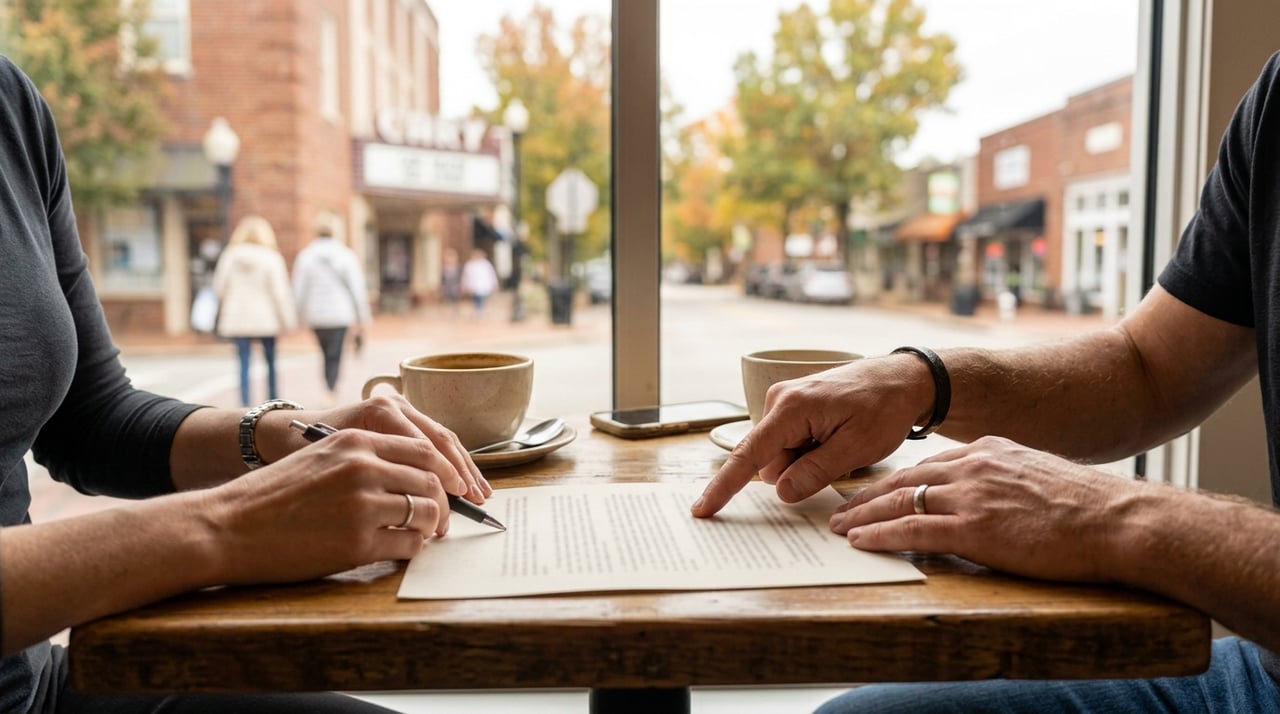
Most buyers meet the buyer agreement at an awkward moment. They have found a house online. They want to see it Saturday. Then the agent sends a document before the showing.
That can feel like a lot, fast. Lisa Quin has said on her YouTube channel that it can feel a bit like being asked to commit before a first date. The feeling is fair. Nobody wants to sign something they do not understand, especially about money.
The real risk is not the agreement itself. It is signing on autopilot. A buyer who skims the form may agree to a long term, a fee they did not discuss, or an exclusive arrangement with an agent they have known for ten minutes. A buyer who refuses to sign anything may miss homes, tour without real representation, and negotiate alone against a seller’s professional. Both paths cost money. Lisa Quin’s job at this stage is to slow the moment down so the buyer signs the right agreement with the right person.
Lisa Quin treats the buyer agreement as the first negotiation of the purchase, not paperwork. Here is the sequence she walks buyers through:
Know which agreement is on the table. Form 202 (Property Showing Agreement) is one page, non-exclusive, and built for touring specific homes. Form 201 (Exclusive Buyer Agency Agreement) is three pages and covers the full search. Form 203 is the non-exclusive version of a full agreement.
Read the compensation line out loud. The agreement must state the agent’s pay as a specific amount or rate. Ask how it works if a seller pays some, all, or none of it. In North Carolina, buyer agreements typically say the agent will seek payment from the seller first, with the buyer covering any difference.
Negotiate the term. The length is not set by law. A shorter first term, such as 30 to 60 days, lets a buyer test the fit before committing longer.
Ask how it ends. Confirm the termination terms in writing, including what happens to a home the buyer toured during the agreement.
Match the agreement to the search. A buyer touring one weekend home in Fuquay-Varina has different needs than a relocating family searching all of Wake County for three months.
Interview before signing an exclusive. Ask each candidate how many Wake County buyers they represented this year, how they handle a seller who will not pay buyer-agent compensation, and how they would win in today’s balanced market.
Plan the offer strategy around the fee. In a market where sellers are offering concessions, a buyer’s agent can often ask the seller to cover part or all of the fee as part of the offer.
Lisa explains the bigger picture in her video on what the NAR settlement means for buyers and sellers in North Carolina. Her short version: North Carolina paperwork has always stated the professional fee up front, so for buyers here the change is more procedural than fundamental. The new part is signing before the first tour. Lisa Quin’s goal is that no buyer signs anything they could not explain to a friend afterward.
This agreement matters more in a balanced market than in a frenzy. In Wake County, buyers finally have room to be choosy. The median sale price was $440,000 in August 2026, down from $458,500 in July, per the Wake County Register of Deeds. Active listings sit near 8,800, roughly 3 to 4 months of supply. Typical days on market run about 38 to 53 days. Sellers are offering concessions at rates not seen since before the pandemic. At the same time, Freddie Mac’s 30-year fixed rate averaged 7.28% on October 1, 2026, the highest since October 2023. Higher rates make every dollar of negotiation count.
That is exactly where a buyer’s agent earns the fee. In Cary and Apex, where well-priced homes near top schools still draw quick interest, the skill is knowing which listings will move and which have room. In Holly Springs, where the August median hit $744,000 on only 26 sales, every comp counts. In Rolesville, Wendell, and other eastern Wake towns with more new construction, the agent’s value often shows up in builder incentives and rate buydowns. In Raleigh’s older neighborhoods, it shows up in inspection and repair negotiations.
One note for land buyers: the touring rule applies to homes, not vacant land, per NC REALTORS® guidance. Lisa Quin still recommends a clear written agreement before any land purchase, because the due diligence on a lot is where representation matters most.
Signing the first form without reading the compensation line. The fee is negotiable, and it must be specific. A buyer should know the exact amount or rate and who is expected to pay it before the first showing.
Agreeing to a long exclusive term with an agent you just met. A one-page Form 202 or a short first term gives both sides a trial run. Commit longer once the fit is proven.
Assuming the seller will always pay the buyer’s agent. Many sellers still do, often through negotiation, but it is not guaranteed. A good agent builds this into the offer strategy instead of hoping.
Touring with the listing agent to “save money.” The listing agent represents the seller. That can work for experienced buyers, but most buyers give up advocacy on price, inspection repairs, and due diligence terms.
Choosing an agent on fee alone. In a market with 3 to 4 months of supply, the right agent can negotiate concessions, repairs, or price that far exceed any difference in fees.
Lisa Quin sees each of these regularly, and every one is avoidable with a 20-minute conversation before the first tour.
Lisa Quin thinks of herself as a counselor and advisor first, a role she describes simply: “Real estate often is about guiding people through complex situations.” The buyer agreement is a perfect example. Lisa walks through every line before a buyer signs, explains what is negotiable, and makes sure the terms fit the search. A Louisiana native, Lisa has lived in the Triangle since the late 1980s and raised her family in Cary. She knows Wake County as a neighbor, from downtown Raleigh to the Holly Springs and Apex suburbs.
Lisa Quin is a member of the Raleigh Association of REALTORS® Top Producers Council and the Women’s Council of REALTORS®. About 70% of her business comes from past clients and referrals, which tells buyers something about how she treats people after the paperwork is signed. Her clients describe the same experience. John B., whom Lisa represented as his buyer’s agent in Rolesville, wrote: “From the beginning, Lisa showed patience, professionalism, and genuine kindness. She never pressured us to make a decision.” Read more client stories on Lisa Quin’s testimonials page.
Do I have to sign a buyer agreement to tour a house in North Carolina?
Yes, if you are touring with an agent who is working with you as a buyer. Since August 17, 2024, MLS rules require a written agreement before an in-person or virtual tour. You do not need one to visit an open house or to tour with the listing agent, who represents the seller.
Is the buyer agent’s commission negotiable in Wake County?
Yes. Compensation is always negotiable and is never set by law or by the MLS. The agreement must state the amount or rate clearly, and Lisa Quin reviews it with every buyer before they sign.
Who pays the buyer’s agent in North Carolina now?
Often the seller still does, either because they offer it or because the buyer asks for it in the offer. If the seller does not pay all of it, the buyer agreement typically makes the buyer responsible for the difference. A strong agent plans for this before writing an offer.
Can I sign a buyer agreement for just one house?
Yes. NC REALTORS® Form 202, the Property Showing Agreement, is a one-page, non-exclusive agreement for touring specific properties. It lets a buyer see a home without committing to an exclusive relationship.
Can I get out of a buyer agency agreement if it is not working?
It depends on the terms you sign, which is why the termination section deserves a careful read. The term length and how the agreement can end are both negotiable up front. For legal questions about any contract, a North Carolina real estate attorney is the right resource.
How do I choose a buyer’s agent in Wake County?
Interview at least two agents. Ask how many Wake County buyers they represented in the past year, how they handle a seller who will not pay buyer-agent compensation, and what they would negotiate for in today’s market. Choose the one who explains the agreement clearly and puts your interests first.
Does a buyer agreement cost me anything if I never buy?
That depends on how the agreement is written. Most buyer agreements tie compensation to a closed purchase, but buyers should confirm this in writing before signing.
Choosing a buyer’s agent is the first real decision of any Wake County home search. It deserves a conversation, not a rushed signature before a Saturday showing. Lisa Quin is happy to sit down, walk through the agreement line by line, and talk through your timeline, budget, and target towns, with no pressure to sign anything that day. Whether the search is a first home in Morrisville, a move-up in Apex, or a relocation from out of state, the right start makes everything after it easier. To schedule a time, meet Lisa Quin and the Quin Realty Group team.
Real Estate
Real Estate

Real Estate
Real Estate

With over 20 years of real estate experience in the Triangle area of NC, Quin Realty Group will give you a full-service experience in purchasing or selling your home! Consider us your personal home concierge!
201 FENTON GATEWAY DR CARY NC 27511